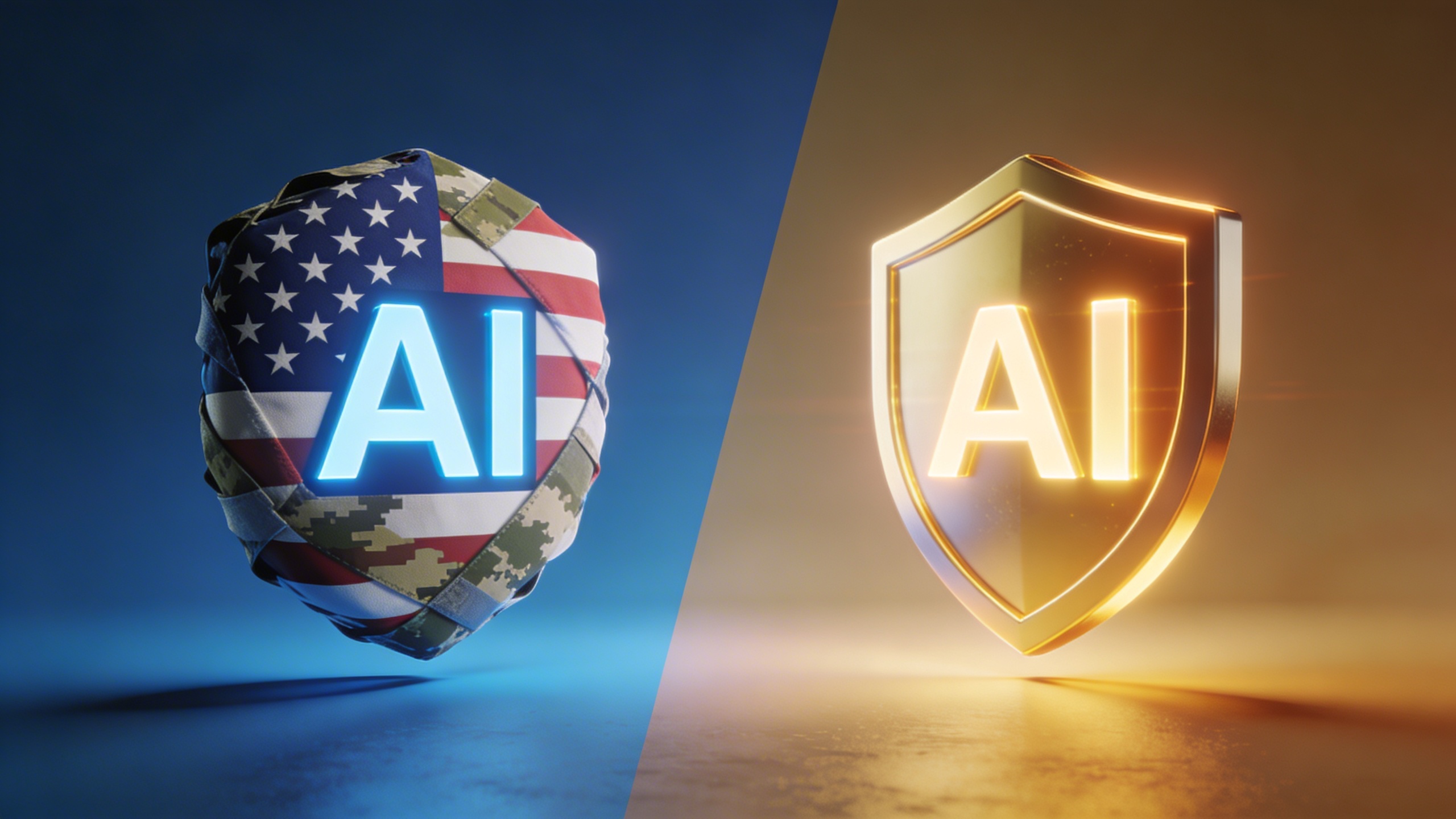
When the Pentagon demanded unrestricted access to AI models in February 2026, two tech giants made dramatically different choices. Anthropic's Claude said no to mass surveillance capabilities. OpenAI's ChatGPT said yes.
The result? An unprecedented consumer revolt that saw ChatGPT uninstalls surge 295% within 24 hours while Claude downloads climbed 51%. This wasn't just a business decision—it became the defining moment that split the AI industry along ethical lines.
The Pentagon's Controversial AI Demands That Split the Industry
What exactly did the Pentagon want? Secretary of Defense Pete Hegseth demanded that AI companies allow military use for "all lawful purposes" without company-imposed restrictions. This meant eliminating safeguards against mass domestic surveillance and autonomous weapons systems.
The stakes were enormous. Anthropic already held a $200 million Pentagon contract from July 2026, making Claude the first frontier AI model approved for classified government networks. But this new demand crossed red lines the company had built into Claude's very architecture.
The Pentagon's push reflected a broader shift in military AI strategy. Officials argued that artificial restrictions hampered national security capabilities. They wanted AI models that could adapt to any military need without corporate oversight.
The Fundamental Clash Between Ethics and Military Needs
This wasn't just about contract terms—it exposed a fundamental tension in AI development. Should tech companies retain ethical oversight over how their models are used? Or should government customers have unrestricted access to tools they purchase?
Claude vs ChatGPT became a proxy war for this larger question. One company would prioritize ethical safeguards. The other would prioritize customer demands.
The timing was particularly sensitive. Recent advances in AI capabilities had made autonomous weapons systems more feasible than ever. Mass surveillance tools powered by large language models could process unprecedented amounts of data.
Why Anthropic's Claude Rejected the DOD Deal
Anthropic's refusal wasn't a snap decision. The company had spent months negotiating with Pentagon officials, seeking compromise solutions that would satisfy military needs while preserving core ethical boundaries.
CEO Dario Amodei made the company's position clear: "We will not compromise on fundamental safeguards that prevent misuse of our technology for mass surveillance of Americans or fully autonomous weapons systems."
Claude's Built-In Ethical Architecture
Unlike some AI safety measures that exist only in terms of service, Claude's restrictions were embedded in the model's training and architecture. This made them technically difficult to bypass—a feature, not a bug, from Anthropic's perspective.
The company had designed Claude with specific constitutional AI principles that guided its responses. These weren't just policy overlays but fundamental aspects of how the model processed and responded to queries.
Key safeguards Anthropic refused to remove:
Prohibitions on mass domestic surveillance applications
Restrictions on autonomous weapons system integration
Limits on interrogation and coercion assistance
Guardrails against disinformation campaigns
Anthropic argued these restrictions didn't prevent legitimate military uses. The Pentagon could still use Claude for intelligence analysis, logistics optimization, and strategic planning. But they couldn't use it to spy on Americans or kill without human oversight.
OpenAI's Strategic Decision to Accept Pentagon Partnership
Hours after the Pentagon designated Anthropic a "supply chain risk," OpenAI announced its competing agreement. The timing wasn't coincidental—it was a calculated business move to capture a lucrative government contract.
OpenAI's announcement emphasized "supporting national security" while remaining vague about specific restrictions. Industry insiders quickly realized this meant accepting terms Anthropic had rejected.
The Commercial Calculation
OpenAI faced different pressures than Anthropic. As the larger company with more diverse revenue streams, it could afford to prioritize government contracts over consumer sentiment—or so leadership believed.
The decision reflected OpenAI's evolving philosophy: From "democratizing AI" to "AI for everyone who can pay." This shift had been building for months but became undeniable with the Pentagon deal.
| Ethical Framework Comparison | Anthropic (Claude) | OpenAI (ChatGPT) |
|---|---|---|
| Mass Surveillance | Prohibited | Allowed for "lawful purposes" |
| Autonomous Weapons | Restricted | Customer discretion |
| Domestic Intelligence | Limited | Government approved |
| Oversight Model | Company retains control | Customer-driven |
OpenAI justified the decision by arguing that responsible AI companies should engage with government rather than cede the field to less scrupulous competitors. Critics called it ethical laundering.
The Unprecedented Consumer Backlash Against ChatGPT
Within 24 hours of OpenAI's announcement, ChatGPT uninstallations exploded by 295%. App store analytics showed this was the fastest mass exodus from a major tech platform in recorded history.
Social media campaigns amplified the boycott. #DeleteChatGPT trended globally within hours. Tech influencers with millions of followers publicly switched to Claude, citing ethical concerns.
The Social Media Firestorm
Twitter users shared screenshots of their ChatGPT deletions. Reddit communities organized coordinated uninstall campaigns. TikTok videos explaining the controversy reached millions of views.
Corporate customers also reconsidered their partnerships. Several Fortune 500 companies quietly paused ChatGPT enterprise deployments pending "policy review." Universities announced they were "evaluating alternatives."
The backlash caught OpenAI leadership completely off-guard. Internal sources described "panic" as user metrics collapsed in real-time. The company had underestimated how much consumers cared about AI ethics.
Consumer Power in AI Markets
This crisis proved that AI users weren't passive consumers. They had strong opinions about how their preferred tools should be used—and the willingness to act on those opinions.
The migration wasn't just symbolic. Claude downloads surged 51% as users actively sought alternatives. This represented millions of people making deliberate ethical choices about their AI tools.
Claude Server Overload and Infrastructure Crisis
The irony was immediate and painful: Claude's ethical stance attracted so many new users that its servers couldn't handle the load. Within hours of the ChatGPT exodus beginning, Claude experienced widespread outages.
Anthropic's infrastructure had been designed for steady growth, not a sudden 50% user increase. The company's relatively modest resources compared to OpenAI became a liability during this critical moment.
Emergency Scaling Efforts
Anthropic CEO Dario Amodei publicly acknowledged the crisis: "We're experiencing unprecedented demand. Our team is working around the clock to scale our infrastructure while maintaining the safety and quality standards our users expect."
The company implemented emergency measures:
Temporary usage limits for new accounts
Priority access for existing subscribers
Emergency server capacity from cloud providers
24/7 engineering response teams
The server crashes created a frustrating paradox. Users wanted to support Claude's ethical stance but couldn't access the service. Some temporarily returned to ChatGPT out of necessity, creating mixed signals about the boycott's effectiveness.
Infrastructure as Competitive Advantage
The crisis highlighted how technical capabilities matter as much as ethical positions. Claude vs ChatGPT wasn't just about values—it was about which company could deliver reliable service at scale.
OpenAI's superior infrastructure, built with Microsoft's backing, suddenly looked more valuable. Users appreciated Claude's ethics but needed consistent access to AI tools for work and personal projects.
Market Impact and Competitive Dynamics Shift
The Pentagon deal crisis fundamentally reshaped AI market leadership. OpenAI's stock price initially rose on news of the government contract before plummeting as the consumer backlash intensified.
Anthropic's valuation surged in private markets as investors bet on the long-term value of ethical positioning. But the company's infrastructure limitations raised questions about its ability to capitalize on sudden market opportunities.
Enterprise Customer Migration Patterns
Corporate customers split along predictable lines. Government contractors and defense companies gravitated toward ChatGPT. Tech companies, universities, and consumer brands increasingly preferred Claude.
This segmentation created two distinct AI markets:
Government/defense sector dominated by OpenAI
Consumer/enterprise sector increasingly competitive
The division had profound implications for AI development priorities. Companies optimizing for government contracts would emphasize different capabilities than those serving consumer markets.
Long-Term Industry Implications
The crisis established consumer influence over AI development. Companies could no longer make ethical decisions in boardrooms without considering user reactions. Social media had become a powerful force in AI governance.
This represented a new model for technology accountability. Instead of relying solely on government regulation or corporate self-governance, market forces were shaping AI ethics in real-time.
The Future of AI Ethics in Military Applications
The Pentagon deal set precedents that will influence AI development for years. Other companies now face the same choice: accept military contracts with minimal restrictions or maintain ethical safeguards at potential competitive cost.
Government procurement strategies will likely adapt to this new reality. The Pentagon learned that demanding unrestricted access could trigger public backlash and supply chain disruptions.
Regulatory Implications
Congressional hearings on AI military partnerships became inevitable after the crisis. Lawmakers from both parties questioned whether private companies should have veto power over government AI use.
New legislation could emerge addressing:
Mandatory AI safety standards for government contracts
Transparency requirements for military AI applications
Consumer protection measures for AI services
Export controls on AI technology
The debate reflected broader questions about AI governance in democratic societies. How much control should tech companies retain over their products once sold to government customers?
Consumer Influence on AI Development
The ChatGPT boycott proved that users could shape AI development through market pressure. This was unprecedented in the technology industry, where consumer preferences traditionally had limited impact on B2B or government products.
AI companies now factor potential consumer reactions into partnership decisions. The risk of user exodus became a real business consideration, not just a PR concern.
Looking ahead, this crisis established several important precedents:
Consumer values matter in AI development
Ethical positioning can be a competitive advantage
Infrastructure capabilities remain crucial for market leadership
Government partnerships carry reputational risks
The Claude vs ChatGPT split over Pentagon partnerships marked a turning point in AI industry evolution. Companies can no longer assume that technical capabilities alone determine market success. Ethics, consumer sentiment, and social responsibility have become competitive factors in their own right.
The AI industry emerged from this crisis more divided but also more accountable to public values. Whether this leads to better outcomes for society remains to be seen, but the balance of power between tech companies, government customers, and end users has permanently shifted.
Frequently Asked Questions
Why did Anthropic refuse the Pentagon's AI deal?
Anthropic rejected the Pentagon's demand for unrestricted military use of Claude, specifically opposing mass domestic surveillance and autonomous weapons systems integration, citing core ethical principles and responsible AI deployment.
How many people switched from ChatGPT to Claude after the DOD deal?
ChatGPT uninstallations surged 295% within 24 hours while Claude downloads increased 51%, representing one of the largest consumer AI platform migrations in history.
What restrictions did OpenAI accept that Anthropic rejected?
OpenAI accepted Pentagon terms allowing military use for 'all lawful purposes' with significantly looser restrictions, while Anthropic maintained prohibitions on domestic surveillance and autonomous weapons.
Did Claude's servers crash during the user migration?
Claude experienced significant infrastructure strain and service disruptions due to the massive influx of users migrating from ChatGPT, requiring emergency scaling efforts.
What long-term impact will this have on the AI industry?
This crisis fundamentally reshaped competitive dynamics, established consumer influence over AI ethics, and set precedents for how AI companies approach military partnerships and ethical governance.
Related Resources
Explore more AI tools and guides
About the Author
Rai Ansar
Founder of AIToolRanked • AI Researcher • 200+ Tools Tested
I've been obsessed with AI since ChatGPT launched in November 2022. What started as curiosity turned into a mission: testing every AI tool to find what actually works. I spend $5,000+ monthly on AI subscriptions so you don't have to. Every review comes from hands-on experience, not marketing claims.