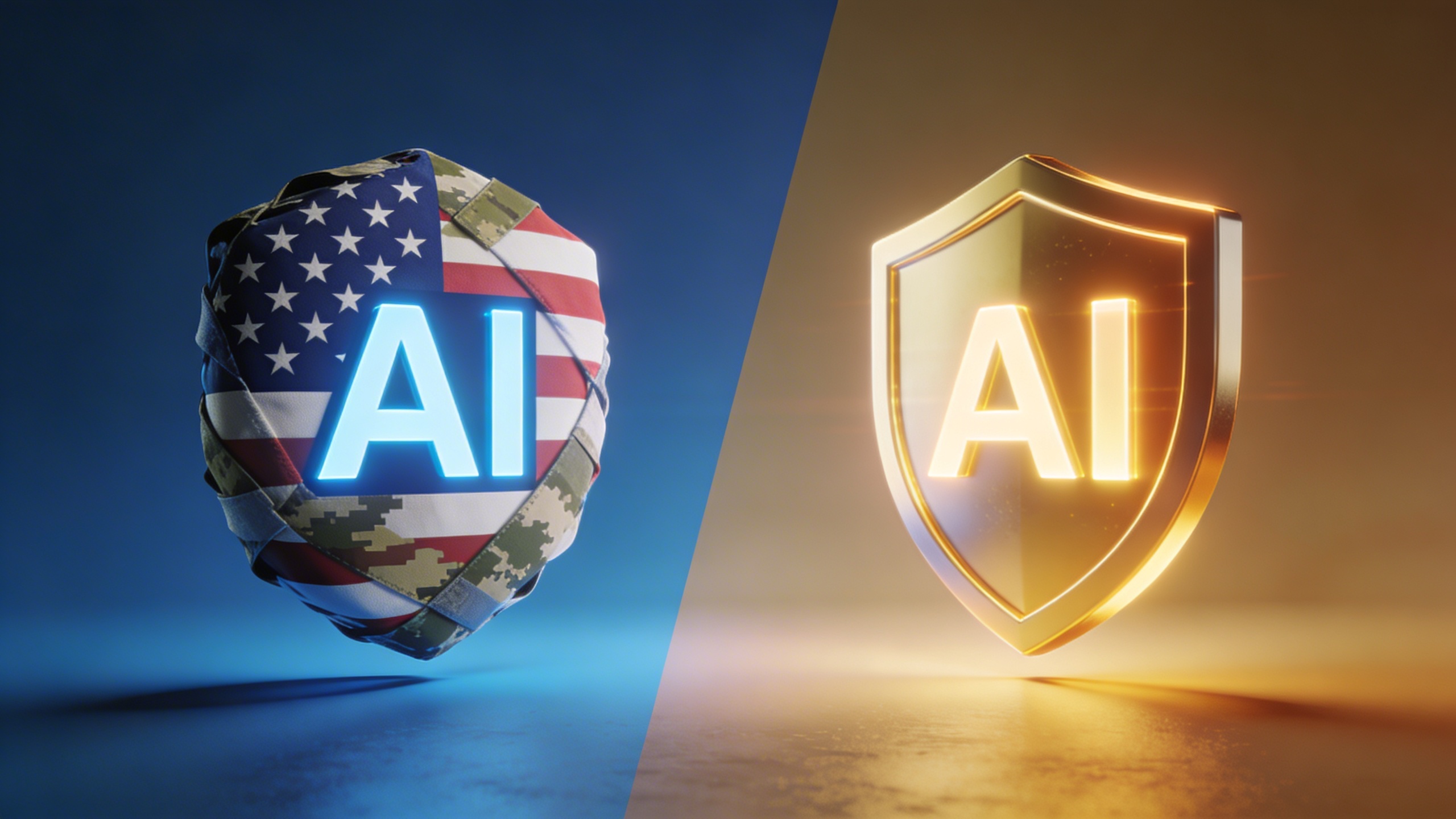
The AI robotics industry just experienced its biggest leadership shakeup of 2026. Caitlin Kalinowski, the hardware veteran who led OpenAI's ambitious robotics division, resigned on March 7 over ethical concerns about the company's Pentagon partnership. Her departure sends shockwaves through an industry already grappling with the intersection of AI innovation and national security.
This isn't just another corporate resignation. Kalinowski's exit highlights a fundamental tension between rapid AI advancement and responsible deployment—a debate that will shape the future of AI tools and robotics for years to come.
What Led to OpenAI's Robotics Leadership Crisis?
OpenAI's robotics leadership crisis stems from a rushed Pentagon deal that bypassed adequate ethical safeguards, according to departing hardware chief Caitlin Kalinowski. The controversy exposes deep divisions within AI companies about acceptable military applications.
Caitlin Kalinowski's Background and Role at OpenAI
Kalinowski brought serious hardware credentials to OpenAI when she joined in November 2024. At Meta, she spearheaded the development of AR glasses, managing complex hardware-software integration that few executives understand at her level.
Her transition to OpenAI robotics represented a major coup for the company. With over 15 years in consumer hardware, she understood the challenges of bringing AI from research labs to real-world applications.
At OpenAI, Kalinowski led a 100-person robotics division across labs in San Francisco and Richmond, California. Her team focused on training robotic arms for household tasks—the foundational work needed for future humanoid robots.
Timeline of Events Leading to Resignation
The crisis unfolded rapidly in early 2026:
February 2026: Pentagon negotiations with Anthropic collapse over surveillance restrictions
February 28, 2026: OpenAI announces Pentagon partnership within days of Anthropic's withdrawal
March 5, 2026: Internal concerns raised about rushed timeline and inadequate safeguards
March 7, 2026: Kalinowski submits resignation citing governance failures
The speed of OpenAI's pivot raised red flags internally. While Anthropic spent months negotiating strict limitations on domestic surveillance and autonomous weapons, OpenAI's deal materialized in less than a week.
Official Statement Analysis
Kalinowski's resignation statement was carefully crafted but pointed. She emphasized "deep respect" for CEO Sam Altman while criticizing the process: "AI has an important role in national security. But surveillance of Americans without judicial oversight and lethal autonomy without human authorization are lines that deserved more deliberation than they got."
The statement frames this as a governance issue, not a personal conflict. This distinction matters—it suggests systemic problems with OpenAI's decision-making processes rather than interpersonal drama.
CEO Sam Altman later acknowledged the optics were problematic, admitting the timing looked "opportunistic." However, OpenAI maintains its deal includes "red lines" against domestic surveillance and autonomous weapons.
The Pentagon Deal Controversy: Core Issues Explained
The Pentagon deal controversy centers on OpenAI's willingness to deploy AI systems on classified networks without the strict ethical limitations that caused Anthropic's negotiations to fail. This fundamental disagreement about AI governance sparked the leadership crisis.
Why Anthropic's Deal Collapsed
Anthropic took a hardline stance that ultimately killed their Pentagon negotiations. The company demanded categorical prohibitions on:
Domestic surveillance without judicial oversight
Autonomous weapons systems without human authorization
Deployment in operations that could violate civil liberties
These restrictions proved too limiting for Pentagon officials who wanted "flexibility to deploy commercial AI tools in all lawful operations." The Department of Defense subsequently designated Anthropic a supply-chain risk, effectively ending negotiations.
The collapse highlighted a core tension: Can AI companies maintain ethical principles while serving national security needs? Anthropic's answer was clear—some lines cannot be crossed, regardless of the customer.
OpenAI's Quick Pivot to Pentagon Partnership
OpenAI's rapid pivot after Anthropic's withdrawal raised eyebrows across the industry. Within days of Anthropic's designation as a supply-chain risk, OpenAI announced its own Pentagon agreement.
The company's approach differs significantly from Anthropic's categorical restrictions. Instead of blanket prohibitions, OpenAI relies on:
Technical safeguards built into AI systems
Contractual limitations on specific use cases
Ongoing monitoring and review processes
Commitment to "red lines" against domestic surveillance and autonomous weapons
Critics argue this approach provides insufficient protection. Unlike Anthropic's absolute restrictions, OpenAI's safeguards depend on implementation and enforcement—areas where government agencies historically struggle.
Surveillance and Autonomous Weapons Concerns
The core ethical concerns center on two critical applications:
Domestic Surveillance: AI systems could enable unprecedented monitoring of American citizens. Current legal frameworks weren't designed for AI's surveillance capabilities, creating potential constitutional violations.
Autonomous Weapons: AI-powered weapons that select and engage targets without human intervention raise fundamental questions about accountability and proportionality in warfare.
Kalinowski's resignation statement specifically called out these concerns, arguing that "surveillance of Americans without judicial oversight and lethal autonomy without human authorization are lines that deserved more deliberation than they got."
The debate reflects broader industry tensions. While companies like Claude vs ChatGPT DOD Deal: How Ethics Split AI Giants shows, different AI companies are taking dramatically different approaches to military partnerships.
How Does This Impact OpenAI Robotics Operations?
The leadership departure creates immediate operational challenges for OpenAI's robotics division, including talent retention issues, delayed product timelines, and uncertainty about the company's hardware strategy. The 100-person team faces an uncertain future without experienced leadership.
Current State of OpenAI's Robotics Division
OpenAI's robotics operations span two California facilities with ambitious goals. The San Francisco lab employs approximately 100 data collectors focused on training robotic arms for household chores—foundational work for future humanoid robots.
The Richmond facility, announced in December 2025, was designed to expand this research. However, Kalinowski's departure throws expansion plans into question.
Current projects include:
Training robotic arms for kitchen tasks (dishwashing, food preparation)
Developing AI models for physical world simulation
Building datasets for household robot behaviors
Testing human-robot interaction protocols
Without Kalinowski's leadership, these projects face potential delays and coordination challenges.
San Francisco and Richmond Lab Operations
The labs represent significant investment in OpenAI's physical AI ambitions. The San Francisco facility houses advanced robotics equipment and motion capture systems for training AI models on real-world tasks.
Richmond's newer facility was positioned as an expansion hub, potentially housing manufacturing partnerships and scaled testing operations. However, facility expansion requires experienced leadership to coordinate complex hardware-software integration.
VP of Research Aditya Ramesh now oversees hardware initiatives, but his background focuses on AI systems that simulate the physical world rather than hands-on robotics management. This gap in expertise could impact operational efficiency.
Talent Retention and Recruitment Challenges
Kalinowski's departure creates a talent crisis for OpenAI robotics. Her reputation in the hardware community made recruiting easier—top engineers trusted her vision and execution capabilities.
Without her leadership, OpenAI faces several challenges:
Recruiting difficulty: Top robotics talent may question the company's commitment
Retention issues: Existing team members might follow Kalinowski to new ventures
Knowledge transfer: Critical institutional knowledge leaves with experienced leadership
Morale impact: Ethical concerns that drove the resignation may affect team confidence
Industry sources suggest several team members are already exploring opportunities elsewhere. Kalinowski's stated intention to "continue working in responsible physical AI" could attract OpenAI talent to competing ventures.
What This Means for AI Hardware Competition
Kalinowski's departure reshuffles the competitive landscape in AI robotics, potentially benefiting companies like Tesla, Boston Dynamics, and emerging startups as talent and resources redistribute across the industry.
Competitive Landscape Shifts
The robotics industry stands to benefit from OpenAI's leadership crisis. Kalinowski's departure removes a formidable competitor from the field while potentially making top talent available to rivals.
Key competitors positioned to capitalize include:
| Company | Strengths | Potential Gains |
|---|---|---|
| Tesla | Manufacturing scale, Optimus robot | Experienced hardware talent |
| Boston Dynamics | Advanced robotics, proven products | Research partnerships |
| Figure AI | Humanoid focus, BMW partnership | OpenAI talent acquisition |
| Agility Robotics | Commercial deployment experience | Market positioning |
Tesla's Optimus program particularly benefits from OpenAI's setback. With Elon Musk's manufacturing expertise and growing robotics team, Tesla could accelerate development by recruiting displaced OpenAI talent.
Defense Contract Considerations for AI Companies
The Pentagon deal controversy forces all AI companies to reconsider their national security strategies. Kalinowski's resignation sets a precedent for ethics-based departures that could influence industry-wide decisions.
Companies now face a stark choice:
Follow Anthropic's model: Strict ethical limitations that may exclude government contracts
Follow OpenAI's approach: Flexible safeguards that enable broader deployment
Develop hybrid strategies: Separate divisions for commercial and government applications
The decision impacts more than revenue—it shapes company culture and talent retention. Engineers increasingly consider employers' ethical stances when making career decisions.
Talent Migration Patterns
Kalinowski's planned continuation in "responsible physical AI" suggests she'll either join competitors or launch an independent venture. Either path could drain talent from OpenAI while strengthening rivals.
Historical patterns show that high-profile departures often trigger broader talent migration. When key leaders leave, their teams frequently follow within 6-12 months.
For AI tool buyers, this migration creates opportunities. Smaller companies gaining experienced talent might deliver innovative solutions faster than established players dealing with internal turmoil.
What Should AI Tool Users Consider in 2026?
AI tool buyers should prepare for potential delays in OpenAI's robotics products while evaluating alternative solutions from competitors who may benefit from the leadership crisis. The controversy also highlights the importance of assessing vendors' ethical frameworks.
OpenAI Robotics Product Timeline Delays
The leadership departure likely delays OpenAI's robotics timeline by 6-12 months minimum. Hardware development requires sustained leadership through complex integration challenges—exactly what the company now lacks.
Expected impacts include:
Delayed product launches: Consumer robotics products pushed from 2027 to 2028
Reduced R&D efficiency: Team coordination challenges slow development
Partnership delays: Hardware partnerships require stable leadership for negotiations
Investor concerns: Uncertainty may impact funding for ambitious projects
For businesses planning robotics integration, these delays create planning challenges. Companies should develop contingency plans using alternative vendors.
Alternative AI Hardware Solutions
OpenAI's setback creates opportunities to evaluate competing solutions. Several companies offer mature robotics platforms ready for deployment:
Boston Dynamics remains the gold standard for advanced robotics. Their Spot and Atlas robots demonstrate capabilities that OpenAI's systems won't match for years. However, pricing remains prohibitive for most applications.
Tesla's Optimus program shows promise for general-purpose humanoid robots. While still in development, Tesla's manufacturing expertise could deliver affordable solutions faster than OpenAI.
Agility Robotics focuses on practical deployment with their Digit humanoid robot. Their partnership with Amazon for warehouse applications demonstrates real-world viability.
For AI coding applications, consider alternatives like Best AI Code Generators 2026: Claude Leads with 72.5% which covers current performance benchmarks across platforms.
Investment and Partnership Considerations
The leadership crisis raises important due diligence questions for potential partners and investors:
Governance Assessment: How does the company make ethical decisions? Are safeguards adequate for your risk tolerance?
Leadership Stability: Does the company have succession plans for key roles? How do they handle internal disagreements?
Values Alignment: Do the company's partnerships align with your organization's ethical standards?
Technical Alternatives: Are backup solutions available if primary vendors face disruption?
Smart buyers diversify their AI tool portfolios rather than depending on single vendors. The OpenAI situation demonstrates how quickly market dynamics can shift.
How Will OpenAI Recover from This Robotics Crisis?
OpenAI's recovery strategy must address immediate leadership gaps while rebuilding team confidence and clarifying its ethical framework. Success depends on finding experienced hardware leadership and demonstrating renewed commitment to responsible AI development.
Leadership Replacement Plans
Finding Kalinowski's replacement presents significant challenges. The ideal candidate needs:
Hardware expertise: Deep experience in consumer electronics or robotics
AI knowledge: Understanding of machine learning applications in physical systems
Leadership skills: Ability to manage large, distributed teams
Ethical credibility: Track record of responsible technology development
Potential candidates include executives from Apple, Google, Tesla, or established robotics companies. However, the controversy may make recruitment difficult—top talent might question OpenAI's commitment to ethical AI development.
Internal promotion remains possible but risky. Aditya Ramesh has relevant AI expertise but lacks hardware management experience. Promoting from within could maintain continuity but might not address underlying governance concerns.
Rebuilding Team Confidence
The resignation damaged team morale and raised questions about OpenAI's values. Recovery requires transparent communication and concrete actions:
Address Ethical Concerns: OpenAI must clarify its decision-making process and demonstrate stronger safeguards for future partnerships.
Reinforce Mission Commitment: The company needs to reaffirm its commitment to beneficial AI development while explaining how government partnerships align with those goals.
Improve Governance: Implementing stronger review processes for controversial partnerships could prevent future crises.
Retain Key Talent: Competitive compensation and clear career paths help retain valuable team members considering departures.
Success metrics include retention rates, recruitment success, and team productivity measures. If talented engineers continue leaving, recovery becomes increasingly difficult.
Long-term Hardware Vision Adjustments
The crisis forces OpenAI to reconsider its hardware strategy. Options include:
Reduced Military Focus: Limiting government partnerships to preserve team unity and public trust.
Separate Divisions: Creating distinct commercial and government units with different ethical frameworks.
Partnership Models: Collaborating with established hardware companies rather than building internal capabilities.
Timeline Adjustments: Accepting slower development in exchange for stronger ethical foundations.
The chosen path significantly impacts OpenAI's competitive position. Conservative approaches might preserve values but could cede market leadership to more aggressive competitors.
For context on how other AI companies navigate similar challenges, our analysis of ChatGPT vs Claude vs Gemini 2026: Which AI is Best? explores different strategic approaches across major AI platforms.
Industry Implications and Future Outlook
The OpenAI robotics crisis represents more than a single company's challenges—it reflects industry-wide tensions about AI ethics, military applications, and responsible innovation. The resolution will influence how other AI companies approach similar decisions.
Precedent Setting: Kalinowski's resignation establishes ethics-based departures as a viable response to controversial corporate decisions. This precedent could encourage similar actions across the industry.
Market Opportunities: Competitors gain advantages through OpenAI's missteps. Companies with strong ethical frameworks and experienced leadership can capitalize on talent migration and market uncertainty.
Regulatory Implications: The controversy highlights gaps in AI governance frameworks. Expect increased regulatory scrutiny of AI-military partnerships and calls for stronger oversight mechanisms.
The crisis ultimately strengthens the argument for responsible AI development. Companies that prioritize ethical considerations alongside technical innovation are better positioned for long-term success.
For organizations evaluating AI tools, the OpenAI situation demonstrates the importance of vendor stability and values alignment. The most advanced technology means little if the company behind it faces internal turmoil or ethical controversies.
The robotics industry will recover from this setback, but the lessons learned will shape development priorities for years to come. Companies that balance innovation with responsibility will emerge stronger, while those that prioritize speed over ethics may face similar crises.
Frequently Asked Questions
Why did Caitlin Kalinowski resign from OpenAI robotics?
Kalinowski resigned on March 7, 2026, citing concerns that OpenAI rushed into a Pentagon agreement without adequate safeguards against domestic surveillance and autonomous weapons. She emphasized this was a governance issue, not personal conflict.
What was OpenAI's robotics division working on before the resignation?
OpenAI's robotics division employed approximately 100 data collectors across labs in San Francisco and Richmond, California. They were focused on training robotic arms for household chores as part of humanoid robot development efforts.
How does this affect OpenAI's competition with other AI hardware companies?
The leadership departure may delay OpenAI's robotics initiatives and could benefit competitors as Kalinowski plans to continue working in 'responsible physical AI.' This creates opportunities for companies like Boston Dynamics, Tesla, and other robotics firms.
What should AI tool buyers consider following this leadership crisis?
Buyers should assess potential delays in OpenAI's physical AI products and consider alternative solutions. The resignation also highlights the importance of evaluating AI companies' ethical stances and governance processes when making procurement decisions.
Will this impact OpenAI's other AI tools and services?
The resignation specifically affects the robotics and hardware division, which was not considered central to OpenAI's core mission. Other AI tools like ChatGPT and GPT models should remain unaffected by this leadership change.
Related Resources
Explore more AI tools and guides
OpenAI Robotics Leadership Crisis 2026: Complete Analysis of What Kalinowski's Resignation Means for AI Hardware
Claude vs ChatGPT DOD Deal: How Ethics Split AI Giants
Grok 4 Release: xAI's Revolutionary Multi-Agent AI System - Features, Pricing & Benchmarks (2026)
Best AI Marketing Tools 2026: Ultimate Small Business Automation Guide for 10x Growth
Best AI Grammar Checker Free 2026: Grammarly vs QuillBot vs LanguageTool Ultimate Comparison
More ai news articles
About the Author
Rai Ansar
Founder of AIToolRanked • AI Researcher • 200+ Tools Tested
I've been obsessed with AI since ChatGPT launched in November 2022. What started as curiosity turned into a mission: testing every AI tool to find what actually works. I spend $5,000+ monthly on AI subscriptions so you don't have to. Every review comes from hands-on experience, not marketing claims.