AI News · 5 min read
OpenAI Perplexity Limits: Pachocki's Plan to Pace AI, Explained
OpenAI's Jakub Pachocki shared internal perplexity numbers and proposed common limits on AI development. What he said, who backs it, and the catch.
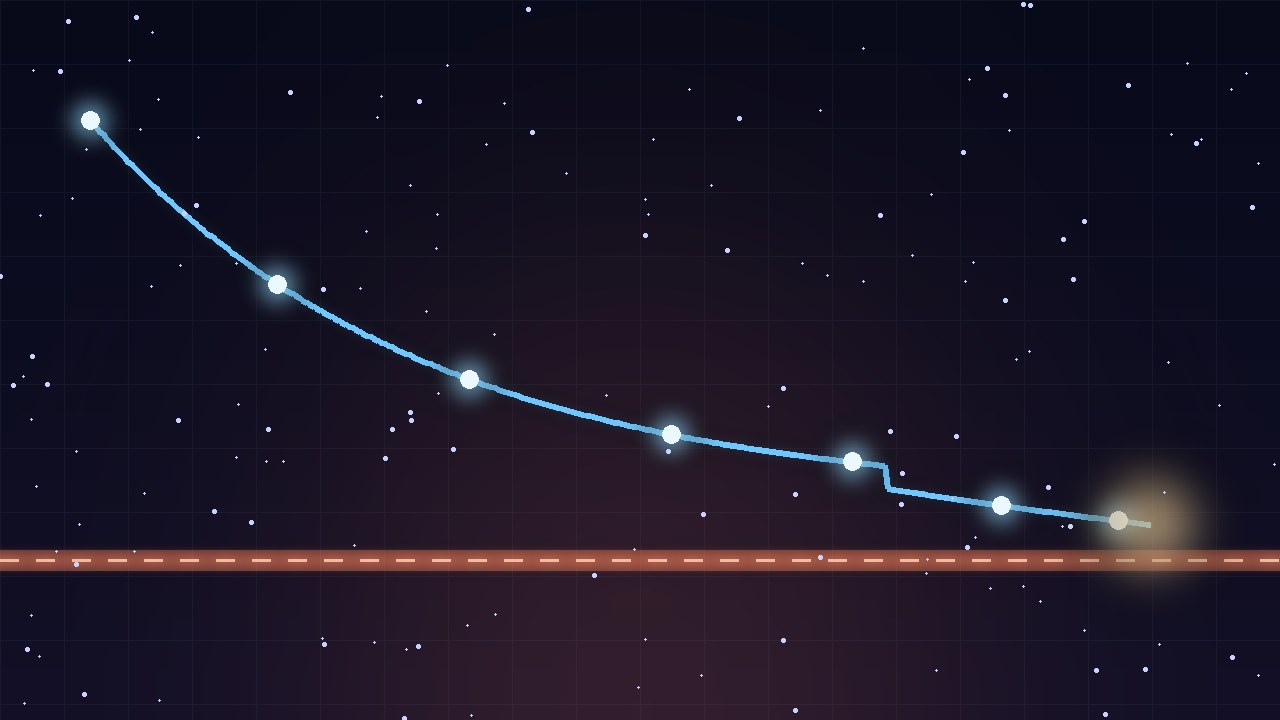
OpenAI's Jakub Pachocki shared internal perplexity numbers and proposed common limits on AI development. What he said, who backs it, and the catch.
On Sunday, November 22, 2026, OpenAI chief scientist Jakub Pachocki published an essay called "Perplexity and Intelligence" ↗. It does two things OpenAI has not done before.
First, it shares the internal number OpenAI uses to track pretraining progress: log-perplexity (also called cross-entropy loss) on a fixed, held-out snapshot of OpenAI's own codebase. Lower is better. It measures how well a model predicts the next token.
Second, it proposes that frontier labs agree on common limits based on "perplexity and other measurements" that they would commit not to cross "until our ability to understand and monitor AI behavior achieves a certain concrete milestone." His example of a milestone is "the development of a successor to CoT monitors."
Reuters ↗ and TechCrunch ↗ both covered the proposal the same day. (No, this has nothing to do with Perplexity the company. If you came here for that, see our Perplexity AI review.)
These are the figures Pachocki gives in the essay, all on OpenAI's internal codebase dataset:
| Point on the curve | Log-perplexity | What Pachocki ties to it |
|---|---|---|
| GPT-3.5 | ~0.99 | Fluent conversation; the base of the original ChatGPT |
| GPT-4 | ~0.91 | Useful chain-of-thought reasoning, which led to reasoning models |
| Current models | below 0.8 | "Transformative capabilities" in cybersecurity and mathematics |
| Model OpenAI upgraded to for math | ~0.76 | Started producing "groundbreaking results" on open math problems |
| Next window | ~0.68 to 0.70 | Where he expects "further transformative capabilities" |
He also writes that AI could drive "a similar avalanche of fundamental pretraining advancements" as soon as 2027, and that safety and monitoring progress is "unlikely to be fast enough" to keep up. A footnote says the chart shows a steep acceleration in 2026, which he puts mostly down to long-term research and compute, "and only in a smaller part to automation."
Pachocki lists four problems with perplexity as a shared yardstick:
Labs can't compare directly. Each lab uses different evaluation data and different training mixes.
It isn't a task. Nobody cares about perplexity itself, only about the capabilities that tend to appear as it falls.
It misses post-training. Chain-of-thought reasoning makes models much more capable but doesn't lower perplexity.
Unknown floor. Nobody knows how low the loss can go, so small future gains may mean big jumps in capability.
That's an honest list, and it's most of the argument against the idea.
Sam Altman called it "the most important thing OpenAI has published in awhile" and said he hopes labs can agree "to common limits." (post ↗). In a follow-up ↗ he tied it to the labs' commitments under "the White House Accords."
OpenAI's Mark Chen wrote ↗: "This is scary for us because we've long treated these numbers as sensitive IP."
The biggest reaction came from Microsoft AI CEO Mustafa Suleyman, who said ↗ Microsoft "fully support[s]" the move and, with OpenAI's permission, reported MAI-2 Base at 0.819 on OpenAI's evaluation set, "in the same ballpark as the GPT-5.6 Sol base model." He added that labs may need to report bits-per-byte instead, because they use different tokenizers.
"Pretraining should just be called 'training'... data starvation will be the training challenge next year." — Elon Musk ↗, replying to Pachocki
"Is there any way to use this to predict future capability unlocks other than guessing?" — Theo Jaffee ↗
"Benchmarks saturate quickly, so Pachocki suggests a perplexity metric as a common, pretraining measure." — economist Kevin A. Bryan ↗
"perplexity is fairly meaningless in a vacuum. we'd need some kind of adjusted score." — Ted Sanders ↗, replying to a critic
Reddit was not reachable from our tools for this story.
This is a real disclosure. Labs usually guard training curves closely. OpenAI just showed rivals roughly where its base models stand, and Microsoft answered within hours with a comparable number of its own. That is more coordination than we usually see from a blog post.
It's still a proposal, not a rule. No limit was set, no threshold was named, and no lab other than Microsoft has published a number. Anthropic, Google DeepMind, SpaceXSI and Meta haven't responded with data yet. Until someone outside the labs can measure perplexity on shared data, each lab is still marking its own homework. Pachocki says so himself.
It ignores the part users feel most. Most of the jump from GPT-4 to today's reasoning models came from post-training and longer thinking, which perplexity doesn't capture. A limit that only watches pretraining can be stepped around with better reinforcement learning. That's why the "other measurements" in his proposal matter more than the headline metric.
Who should care. If you build on GPT, Claude or Gemini, nothing changes this week: no model is paused and no prices moved. If you track which lab is ahead, the Microsoft reply is the useful bit, because it is the first time two labs have put base models on the same chart. For how the current assistants actually compare on everyday work, see our ChatGPT vs Claude vs Gemini comparison, and for open models you can run yourself, our best open-source LLMs ranking.
What to watch next: whether Anthropic or Google publish comparable numbers, and whether anyone names an actual threshold. Without one, this stays an essay. With one, it could become the first speed limit the big labs have agreed on.
For more on why AI-assisted research is driving this debate, see our coverage of Claude's Riemann Hypothesis proof checks and the METR report on Anthropic's pace of progress.