What Google launched
On November 19, 2026, Google introduced Tool Retrieval ↗ in the Gemini API, now in preview in the Interactions API. It targets a problem anyone building agents will know: once an agent is connected to dozens or hundreds of tools, sending every tool's full parameter schema with every request "inflates input token counts, adds latency, and lowers tool-selection accuracy as the candidate list grows," as Gemini API product manager Lucia Loher and DeepMind research scientist Nora Kassner put it.
GCN ↗ covered the launch on November 21. It noted that Google has not said when the feature will reach general availability.
How it works
You change two things in a request:
Add a tool_search tool to your tools list.
Set defer_loading: true on the tools you want to hold back.
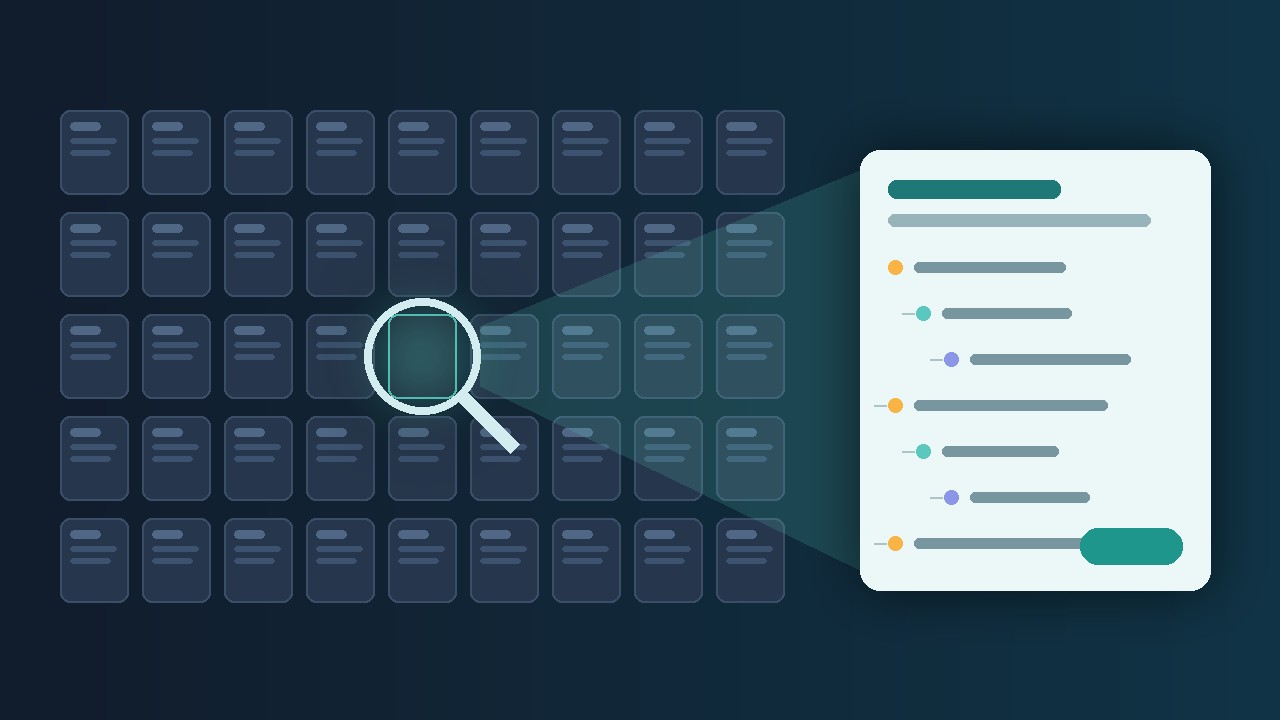
The model still sees the name and description of every deferred tool, so it knows what exists. The parameter schemas stay out of context. When the model needs a tool, it asks for it by name, the API loads the full schema, and the model makes the function call, all inside the same request. The tool_search_call and tool_search_result steps show up in interaction.steps, so you can see which tools the model looked at.
Other details from Google's post:
No index to host. Gemini runs the search on the server. Google suggests keeping your most-used tools loaded and deferring the long tail.
Client-side option. If you have your own tool registry or per-user permission filter, declare tool_search with "execution": "client" and run the lookup yourself. That adds one round trip per search, but lets you add new tools mid-conversation when a user connects an integration.
MCP servers. Set defer_loading: true on an mcp_server tool and every tool that server exposes loads on demand.
Caching. Loaded schemas are added later in the conversation, so the cached prompt prefix stays the same from turn to turn.
Price and model support
There is no separate charge. You pay standard input and output token rates for the model. Turning on tool_search adds "a small, fixed block of input tokens," and each schema the model loads is billed as input for the rest of the conversation. Google's advice: you save when the schemas you never load outweigh the ones you do, so "measure it against your own traffic."
Tool Retrieval works with Gemini 3.6 and later, including all Gemini 4 models, but only in the Interactions API. Google's own example uses Gemini 4 Hydrogen.
How it compares with OpenAI and Claude
Google is late here, and its design closely matches what OpenAI and Anthropic already offer with the same defer_loading pattern:
| Gemini Tool Retrieval | OpenAI tool search | Claude tool search tool |
|---|
| Status | Preview (from Nov 19, 2026) | Available in Responses API | Available in Messages API |
| Setup | tool_search + defer_loading: true | tool_search + defer_loading: true | Regex or BM25 search tool + defer_loading: true |
| Models | Gemini 3.6+ and all Gemini 4 | gpt-5.4 and later | Claude Haiku 4.5, Sonnet 4.5, Opus 4.5 and newer |
| Hosted search | Yes | Yes | Yes |
| Bring your own search | Yes (execution: "client") | Yes (client-executed) | Yes (custom implementation) |
| MCP servers | Defer a whole server | Defer a whole server | Defer a whole server via the MCP connector |
| Extra fee | None | No separate fee in the guide | Not metered separately |
Sources: Google ↗, OpenAI tool search guide ↗, Claude tool search docs ↗.
Anthropic's docs give the clearest sense of the payoff. A typical setup with GitHub, Slack, Sentry, Grafana and Splunk "can consume ~55k tokens in definitions before Claude does any work," and tool search "typically reduces this by over 85 percent." Anthropic also says tool-picking accuracy drops once you pass 30 to 50 tools. OpenAI recommends grouping deferred functions into namespaces of fewer than 10 tools for the best savings. Google has not published its own token or accuracy numbers.
What developers are saying
"If your agent sends every schema every turn, measure input tokens and tool-pick accuracy before/after. Loaded schemas still bill." — @hazemomier ↗
"My view: schema-bloat fix, still preview." — @UK_PassPorts ↗
"Stop loading every full schema into every request." — @DantonDev ↗
Most posts so far are summaries, not hands-on reports. Reddit was not reachable from our tools for this story.
Our take
Turn it on if your Gemini agent has more than a couple of dozen tools or a big MCP server. It's a flag, it costs nothing extra, and it keeps your cache warm. The risk is the one GCN points out: if the search misses the right tool, the model never gets to pick it. Keep the tools you use most undeferred and write clear descriptions, since that is all the model sees.
It's not a reason to move to Gemini. All three big APIs now work the same way, which is good news if you run agents across providers. A multi-provider agent can use one tool-loading pattern almost unchanged. The real limit for Google is that it only works in the Interactions API, so apps still on the older Gemini API calls need to move first.
Who benefits most: teams running large MCP setups, where tool definitions can take up much of the context window. Our MCP guide and AI agent framework comparison cover the wider setup. For the models behind it, see our Gemini 4 Hydrogen and Gemini 4 Neon breakdowns. Before you budget, note that Gemini 4 Argon and Carbon prices double on December 1.