AI News · 5 min read
Kling Image 4.0: Native 8K, Long Text and Image Sets Explained
Kuaishou's Kling Image 4.0 claims native 8K, up to 2,000 characters in one image, and sets of 10. No official price and no independent benchmark.
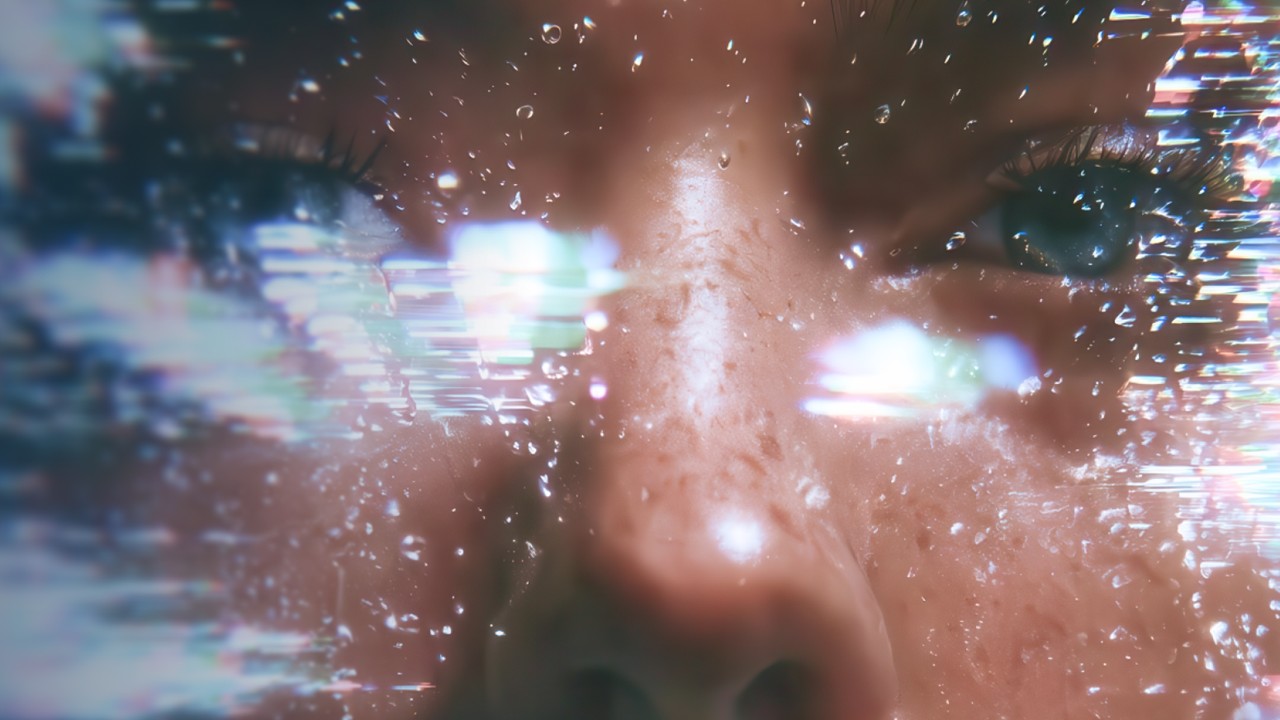
Kuaishou's Kling Image 4.0 claims native 8K, up to 2,000 characters in one image, and sets of 10. No official price and no independent benchmark.
On November 18, 2026, Kling AI, Kuaishou's image and video product, published Meet Kling Image 4.0 ↗, headlined "Stunningly realistic. Sharp. Precise." Kling says the model is "now live on Kling Creative Studio and available via API to enterprises and developers," and that "Kling Image 4.0 is now available to all users." TechNode Global ↗ (November 18) and IT之家 ↗ covered the launch. The lead image is a crop of Kling AI's official launch image from that post, headline text removed, used for news reporting; credit Image: Kling AI. It is Kling's own promotional image, not output from this desk. We have not used Kling Image 4.0. The blog states no price. This note does not add one.
The capabilities below are Kling's claims unless the sentence names TechNode or a reseller.
Kling says Image 4.0 uses a "Native Unified Understanding and Generation Architecture": visual understanding and generation "in a single autoregressive framework." The three upgrades it leads with are realism at native 8K, text inside the image, and image sets from one prompt.
On realism, Kling says the model handles skin, lighting, and materials, and that native 8K is available "for the first time." It lists "110+ preset color grading styles" and says an uploaded reference image can supply a palette and a grade. On text, one image holds up to 2,000 characters, prompts run up to 15,000 tokens, and the model includes "70+ preset commercial fonts" plus reference uploads for typography. The languages are Simplified Chinese, Traditional Chinese, English, Japanese, Korean, Spanish, and Portuguese. Text and font styles, Kling says, can be edited on images made on the platform. On sets, one prompt yields up to 10 images "with cohesive styles and content," and the model also makes long-form images for e-commerce detail pages and web design.
| Limit | Kling's figure |
|---|---|
| Text in one image | Up to 2,000 characters |
| Prompt length | Up to 15,000 tokens |
| One prompt | Up to 10 images, one style |
TechNode wrote that prompts can be "as many as 2,000 characters." That conflicts with Kling's blog. On Kling's page, 2,000 characters is the in-image text limit. The prompt limit is 15,000 tokens. This note uses Kling's figures.
TechNode reports that Kling published no independent benchmarks, no evaluation method, and no market-by-market pricing, and that the claims "remain vendor assertions." It also reports no country list. The financing line is the company's: earlier in November, Kling AI completed a $2.9 billion financing valuing the business at about $28 billion, per the company, led by Kuaishou. That is not a price for Image 4.0. "Available to all users" is Kling's sentence, not a list of countries or a free tier. The only generation numbers below are a reseller's.
"Skin texture, loose hair, fabric, film grain. These are the details worth zooming into" — Magnific ↗ (@magnific), which offers the model
"8K native resolution. can not post it this way on any Social Media platform file is much too large." — @Bic_Revelation ↗
"Against Kling Image V3, it finished in 40 to 47 seconds, versus 109 to 152." — Pixel Dojo ↗ (@PixelDojoAI)
"It's 1.75 credits at 2K, 2.5 at 4K and 4 at 8K." — Pixel Dojo ↗ (@PixelDojoAI)
"one still came back with a headline word doubled. Still worth proofing every line." — Pixel Dojo ↗ (@PixelDojoAI)
"One catch: every word came back in Chinese. Worth adding "in English" to the prompt if you sell in the US" — Pixel Dojo ↗ (@PixelDojoAI)
"My business test is simpler: can I revise one detail without rebuilding the whole asset?" — @Iaftabmustafa ↗
The seconds and the credit prices are Pixel Dojo's figures for Pixel Dojo's platform. They are not Kling's price and not a Kling benchmark. The doubled headline and the Chinese text are the same account's reports.
Reddit was not reachable for this story.
The jobs in the post are specific. An e-commerce page that needs a long product image, a poster with a lot of type, and a storyboard that has to stay in one style are the uses Kling describes. A single square with no text does not need the 2,000-character claim or a 10-image set.
8K is a file-size choice before it is a quality claim. Kling says 8K keeps detail for large displays and for crops. @Bic_Revelation's point is the practical one: a native 8K file is too large for a normal social upload. Match the export to the place you publish. The skin, light, and fabric language is Kling's description of its own samples, including the face in the launch image above.
Read the type. Kling claims 2,000 characters, seven languages, and on-platform text and font edits. Pixel Dojo said one result doubled a headline word and another came back entirely in Chinese. That is a reseller's anecdote. It is also the failure that matters on a poster. @Iaftabmustafa's test, one detail changed without a full rebuild, is the edit question. Kling says those edits exist on its platform. We have not tried them.
Compare it with writeups that already exist, not with a score Kling did not publish. Seedream 5.5, MiniMax H3-Image, and ChatGPT Images 2.6 are the recent still-image notes. Hosted alternatives are in Midjourney alternatives. Prices sit on AI image generation. Video is a different product: best AI video generators.
Verdict: Treat native 8K, 2,000 characters inside one image, and sets of up to 10 as Kling's claims. They are a reason to proof a real layout, not a ranking. Watch for a price, an independent test with a stated method, and a country list. Until those exist, the blog post is the vendor's description of its own model.