AI image generators: prices, free tiers and licences, October 2026
4 articles available
This page lists API, subscription and licence terms for Midjourney, FLUX, Nano Banana, Seedream, Ideogram, Canva and Stable Diffusion, plus OpenAI's token pricing and one retired model, DALL-E 3, which OpenAI removed from its API on 12 May 2026. Every price was read from the vendor's own page on 15 October 2026.
Through an API, FLUX.2 [klein] 4B starts at $0.014 an image and Nano Banana Pro costs $0.134 for a 1K or 2K image. As a flat subscription, Midjourney starts at $10 a month and Ideogram at $15 a month billed yearly. For nothing, Canva's free plan includes up to 20 AI uses, the Gemini app's free plan includes image generation, and Stable Diffusion's weights are free to download while your revenue stays under $1 million.
Prices and plan details checked on October 15, 2026.
On this page
What one image costs through an API
Model
Price per image
Detail
FLUX.2 [klein] 4B
from $0.014
Text-to-image; editing from $0.015. Black Forest Labs lists it for real-time, high-volume use.
FLUX.2 [pro]
from $0.03
Text-to-image; editing from $0.045. Listed for production workflows.
FLUX 3 Image
$0.048 at 1k
About 1 megapixel. $0.041 at 768 square, $0.07 at 1.5k, $0.10 at 2k, $0.607 at 4k.
Seedream 5.0 Pro (ByteDance, via BytePlus)
from $0.045
BytePlus lists per-image pricing starting at $0.045; the first reference image is free.
Nano Banana 2 (Gemini 3.1 Flash Image)
$0.067 at 1K
$0.101 at 2K and $0.151 at 4K on Google's standard rate.
Nano Banana 2.1
$0.0336 at 1K
$0.0504 at 2K and $0.113 at 4K. Google describes it as an update to Nano Banana 2.
Nano Banana Pro (Gemini 3 Pro Image)
$0.134 at 1K or 2K
$0.24 at 4K. Google's Batch rate is half. Google lists no free API tier for it.
Price per image from each vendor's own API pricing page, checked 15 October 2026.
A hundred 1-megapixel images cost $4.80 on FLUX 3 Image and $13.40 on Nano Banana Pro, so the Google model is about 2.8 times the price per image.
OpenAI bills its image models by the token instead of by the image. Image output is $30 per million tokens on the gpt-image-2.5 models and $15 on the batch rate. The cost of one picture depends on its size and quality setting, so we do not convert it into a single figure.
Monthly plans: what the price buys
Service and plan
Price
What the plan page lists
Midjourney Basic
$10 a month, $96 a year
3.3 fast GPU hours a month. No Relax mode.
Midjourney Standard
$30 a month, $288 a year
15 fast hours and unlimited Relax image generations.
Midjourney Pro
$60 a month, $576 a year
30 fast hours, Relax for images and standard-definition video, Stealth Mode.
Midjourney Mega
$120 a month, $1,152 a year
60 fast hours, the same Relax and Stealth features as Pro.
Ideogram Plus
$20 a month, or $15 a month billed at $180 a year
2,400 priority credits a month and unlimited slow credits.
Ideogram Pro
$60 a month, or $42 a month billed at $504 a year
7,500 priority credits a month and unlimited slow credits.
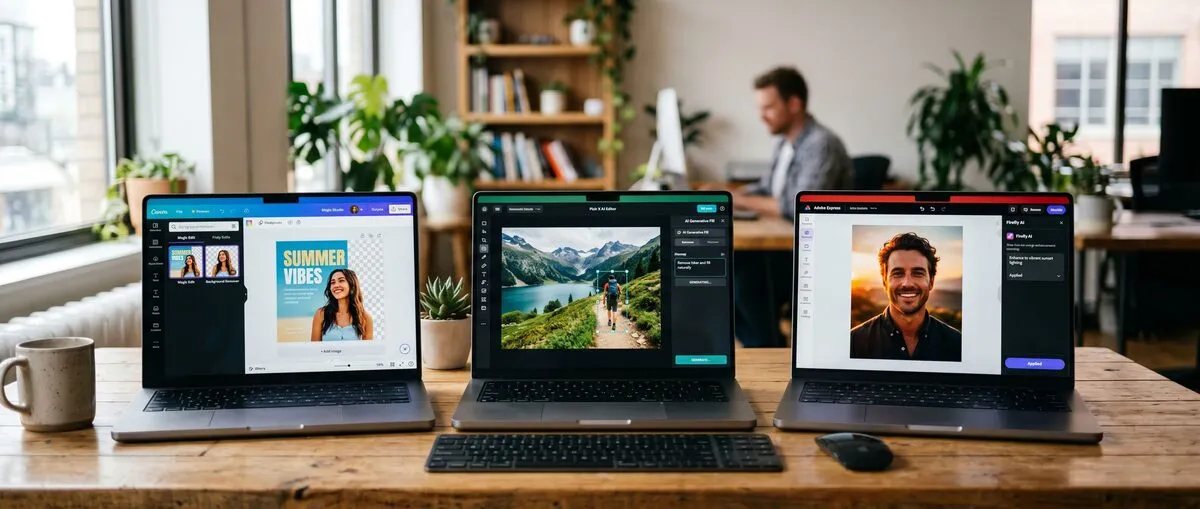
Canva Free
$0
Up to 20 Standard or Premium AI uses.
Canva Pro
US$144 a year
Canva says 10 times the AI allowance of the free plan, with an AI Pass add-on available at extra cost.
Plan prices in US dollars from the vendors' pricing pages, checked 15 October 2026.
On Ideogram 4.5 a Medium-quality image costs 6 credits, so Plus' 2,400 priority credits come to 400 images a month, or 240 at High quality (10 credits each). Slow credits are unlimited and keep generating after the priority credits run out, but they queue, and the AI editing features need priority credits.
On commercial use, Midjourney says subscribers may use their images in almost any way, but a company making more than $1,000,000 a year in gross revenue must buy the Pro or Mega plan. Ideogram's pricing FAQ says it does not claim ownership of your images and that you can use them for any purpose, commercial use included; its Terms of Service say you must secure any third-party permissions you need.
Open weights and self-hosting: what the licences allow
Model
Where it runs
Terms
Stable Diffusion 3.5
Your own hardware
Stability AI's Community licence is free for researchers, developers, small businesses and creators with less than $1M in annual revenue. Commercial users must register with Stability, and the licence ends when your revenue passes $1M until Stability grants you one. The Enterprise licence is custom-priced.
FLUX.2 [dev]
Your own hardware only
Open weights for non-commercial use, with no hosted API. Black Forest Labs sells separate self-hosting licences that include it (Platform and Professional tiers, 100K images a month); the page gives no dollar price.
FLUX.2 [klein]
Your own hardware, or the hosted API
The Builder self-hosting tier covers the klein models: 10K images a month, 1 domain, 10 licensed users, with fine-tuning and LoRA rights. The page gives no dollar price.
Licence terms as stated by Stability AI and Black Forest Labs, checked 15 October 2026.
To experiment locally, FLUX.2 [dev] and Stable Diffusion cost nothing beyond the GPU. If you sell what you make, read the terms column first: [dev] is non-commercial until you license it, and Stable Diffusion's free terms stop at $1 million in revenue.
Free ways to start
Canva Free: up to 20 Standard or Premium AI uses, pooled across its AI tools and reset every month.
Ideogram: the pricing page says eligible free accounts receive weekly credits after signing in with Google, Apple or Microsoft, and that the amount may vary.
Gemini app, free plan: the plan lists image generation and editing. Google Flow gives free accounts limited access to Nano Banana Pro.
Stable Diffusion weights: free to download and run if your annual revenue is under $1 million. You supply the GPU.
Not free: Midjourney lists four paid plans, the cheapest $10 a month. Google lists the Nano Banana Pro API as not available on its free tier.
Retired: DALL-E 3
OpenAI removed dall-e-2 and dall-e-3 from its API on 12 May 2026. Its deprecations page names gpt-image-2 as a model to move to, and lists gpt-image-1 (shutting down 23 October 2026) and gpt-image-1-mini (1 December 2026) with the gpt-image-2.5 models as their substitutes. Our ChatGPT image generation guide covers what the ChatGPT app can do.
Frequently asked questions
Which AI image generator is best?
For a flat monthly price, Midjourney (from $10) and Ideogram (from $15 a month billed yearly) are the subscriptions priced here. For a price per image through an API, FLUX, Nano Banana and Seedream are listed above. To run a model on your own hardware, Stable Diffusion and FLUX.2 [dev] are the open-weight choices, with the licence limits shown in the table.
Is there a free AI image generator?
Yes, with limits. Canva's free plan includes up to 20 AI uses a month, Ideogram gives eligible free accounts weekly credits, the Gemini app's free plan includes image generation and editing, and Stable Diffusion's weights are free to download if your revenue is under $1 million. Midjourney lists four paid plans, the cheapest $10 a month.
Can I use AI-generated images commercially?
It depends on the tool. Midjourney lets subscribers use their images freely, but a company earning over $1,000,000 a year must be on Pro or Mega. Ideogram says it claims no ownership of your images. Stable Diffusion is free for commercial use under $1 million in revenue, and FLUX.2 [dev] is non-commercial unless you buy a self-hosting licence. This summarises the vendors' own pages and is not legal advice.
What happened to DALL-E 3?
OpenAI removed dall-e-2 and dall-e-3 from its API on 12 May 2026 and names gpt-image-2 as a model to move to. Its deprecations page also schedules gpt-image-1 for shutdown on 23 October 2026 and gpt-image-1-mini on 1 December 2026.
How much does an AI image cost?
Through an API, from $0.014 for a FLUX.2 [klein] 4B image to $0.134 for a 1K or 2K Nano Banana Pro image. At 4K, Nano Banana Pro is $0.24 and FLUX 3 Image is $0.607. On a subscription, Ideogram Plus' 2,400 priority credits equal 400 Medium images a month.