What happened
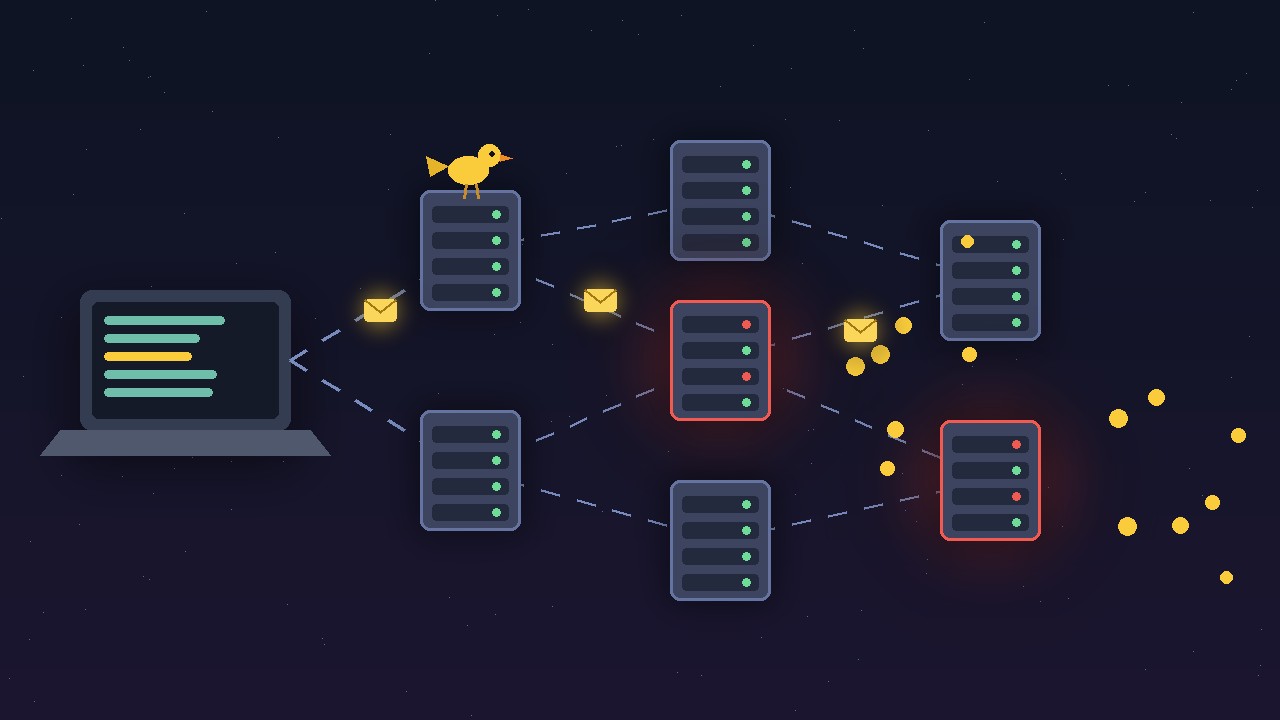
If you send prompts through an AI router to cheap open-weight model hosts, this week's news is about you. HD Moore, the creator of Metasploit and now chief research officer at the security firm Dragos, published a report on November 19, 2026 called Three breaches, endless leaks ↗. From July through November, his team sent "approximately two million prompts" to widely used AI services. Each prompt carried one unique bait secret, such as an AWS key tied to an empty account, an SSH password, a private URL or a fake git repository. Then they watched to see who tried to use them.
Ars Technica ↗ covered the research on November 20 and called the result "an ecosystem that leaked highly sensitive data like a sieve." The story got bigger over the weekend as providers started to confirm their part in it.
The three findings
Dragos lists three kinds of failure:
Breached providers. Attackers were "actively stealing data from three different hosting providers," and "none of the three providers knew about their breach until we notified them." In the largest case, every request sent during a few windows in late October was copied, including requests the provider rejected before a model ran. Some stolen requests in the other two breaches were flagged Zero Data Retention (ZDR). The bait AWS keys were used for "tens of thousands of AWS API calls."
Marketplace sellers reading prompts. Some resellers on an inference marketplace only had to list a model at the lowest price and turn on request logging. In one case someone on a home connection in France took passwords from two prompts and tried them as root over SSH by hand. Dragos says the leak "follows the seller and not the marketplace as a whole."
Privacy settings ignored. An unnamed Chinese AI lab fetched the secret URLs from more than half the prompts sent to its models, "including roughly two-thirds of the requests marked as 'no data collection' or Zero Data Retention." Prompts sent to US resellers of that lab's models triggered the same scraper. One link turned up in a Feishu (Lark) company chat 24 days after the request. Dragos also says one large US provider was still crawling a secret URL more than two months after a single call to its search endpoint.
Moore's summary on X narrows the blast radius: "everything that got routed to MiniMax in China was likely scraped, this doesn't apply to OpenRouter generally (ex: Bedrock/Azure/Vertex and US frontier labs didn't leak)" (post ↗).
Who has confirmed what
| Company | What it said | Date |
|---|
| OpenRouter | No breach of OpenRouter. Off-boarded 3 providers, removed 125 endpoints from ZDR eligibility, notified affected customers | November 22 (blog ↗) |
| Novita | A routing error sent some MiniMax requests to MiniMax's official API between May 28 and November 11, 2026, including ones routed in from OpenRouter; affected models suspended | November 22 (notice ↗) |
| Together AI | An AI coding agent committed a credential to its public xorl repo; someone used it to download stored prompt samples from June and July (MiniMax M3, GLM-5.2, Kimi K2.6 requests) | November 21 (post ↗) |
Ars reported in a November 21 update that OpenRouter emailed customers that the potential exposure involved prompts sent to MiniMax, either directly or through three resellers: AtlasCloud, Novita and StreamLake. OpenRouter's own page also lists a preliminary report from Phala. Unite.AI ↗ covered Together's disclosure, which says five of the credentials the intruder tested were Dragos canaries. Together is now making ZDR the default for new accounts.
Note what is and isn't known. Dragos does not name the three breached hosts or the Chinese lab. The table only covers companies that have spoken publicly. OpenRouter says "not all affected providers have posted publicly."
What people are saying
"the OpenRouter situation for anyone curious: -someone managed to access outputs sent to MiniMax ... -40 to 130 hours later someone opened the secret links" — Michael ↗ (@michael_chomsky), in a post with more than 330,000 views
"A ZDR checkbox only covers the first hop." — @superalesha ↗
"ZDR is a promise, not a control." — @Z3nlyte ↗
A top Ars commenter pushed back on the scope: "this wasn't OpenAI, Anthropic, Microsoft or Google. It was all the companies in the 'budget' AI market."
Reddit was not reachable from our tools for this story.
What to do now
Check your router logs for MiniMax traffic from late May to mid-November, plus anything that went to Together's serverless API in June and July. Rotate any key, token or password that appeared in those prompts. Novita gives the same advice.
Pin providers instead of taking the default pool. Moore told Ars that users should avoid default provider or reseller pools and pick upstream providers themselves. On OpenRouter that means setting an explicit provider order and turning off fallbacks for sensitive work.
Treat ZDR as a request, not a guarantee. In Dragos's words, "A privacy flag doesn't help when the attacker is already inside."
Keep secrets out of agent context. Coding agents read whatever is in the repo, .env files included. Use scoped, short-lived credentials and secret scanning, which is what Together says it now does.
Our take
This is not a reason to stop using OpenRouter, but it is a reason to stop routing blind. The failures sit with specific hosts and resellers, mostly in the cheapest tier of open-weight inference, not with the router itself. OpenRouter's response (cutting providers, pulling ZDR labels, and promising to run canary tests on an ongoing basis) is the right one. Still, it only helps if you are not letting the cheapest seller win every request.
Who should care most: teams sending customer data, source code or credentials to open-weight models through any aggregator. If you picked a "US host" to keep data in the US, Dragos shows that the label alone did not guarantee it.
What we'd use: for sensitive work, go direct to a first-party API with one contract, or a major cloud (Moore names Bedrock, Azure and Vertex as clean in his tests), or self-host. Our best open-source LLM comparison covers models small enough to run yourself, such as Inkling 2 Mini on a 32GB laptop. Save routers for low-risk, high-volume jobs. For more on how routing products differ, see our coverage of Perplexity's Orchestrator API, OpenRouter's Auto Code router and Stripe's OpenRouter acquisition. If you wire agents to many tools, our MCP guide explains where credentials end up.