AI News · 5 min read
Tencent Hy4 Open Weights: 770B Model, New License, Hardware
Tencent put Hy4, Hy4-FP8 and Hy4 base on Hugging Face. The license is not Apache 2.0, and the FP8 weights alone are about 0.79 TB.
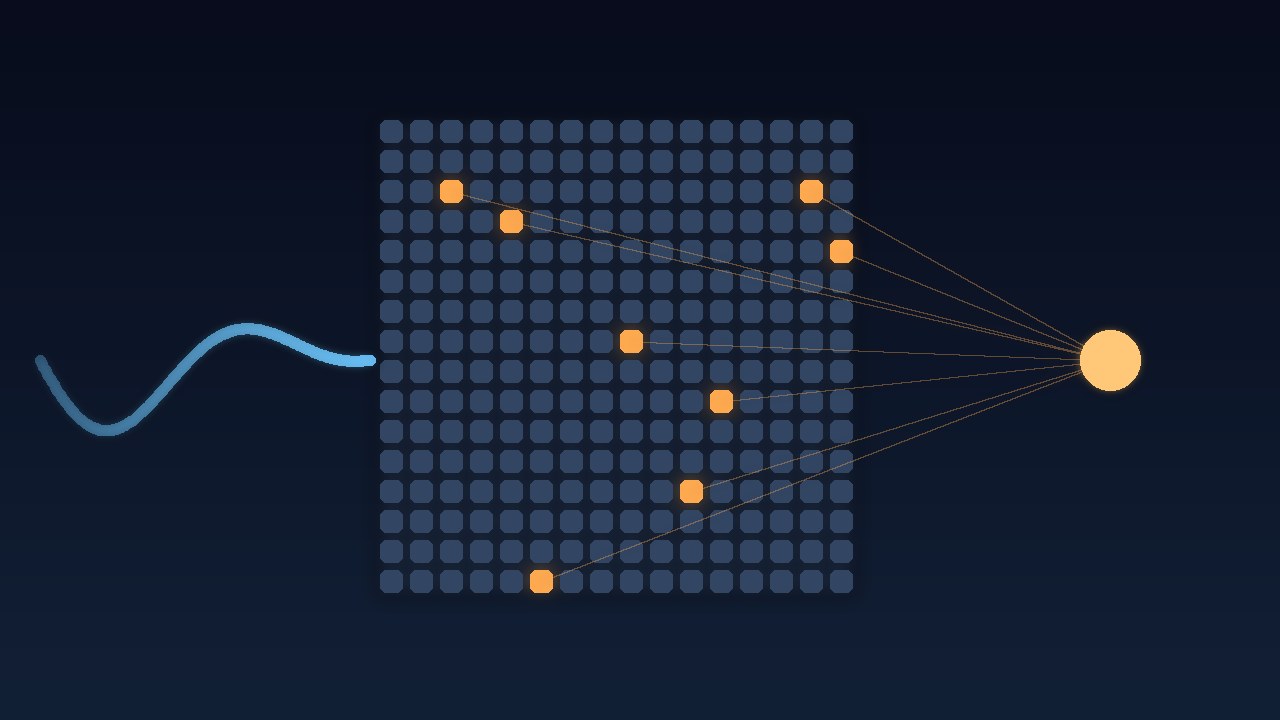
Tencent put Hy4, Hy4-FP8 and Hy4 base on Hugging Face. The license is not Apache 2.0, and the FP8 weights alone are about 0.79 TB.
On November 20, 2026, Tencent's Hy team posted the weights for its flagship Hy4 model. The Hy4 model card ↗ on Hugging Face says: "We open-source Hy4, Hy4-FP8, and the pre-trained Hy4 base model weights on Hugging Face, ModelScope, and GitCode." The Hugging Face listing shows all three repos updated at 03:05 UTC (08:05 Asia/Karachi). Tencent Hy on X ↗ announced a System Card ↗ alongside the weights, and separately said ↗ Hy4 can be run on Together AI. TechNode ↗ covered the release the same day and says it follows Hy4's first launch on November 4. The picture above is an original graphic created by aitoolranked. We have not run Hy4.
The three checkpoints are an instruct model (Hy4), an FP8 version of it (Hy4-FP8), and a pre-trained base model that is not tuned for chat. The smaller Hy4 flash, covered in our Hy4 flash pricing note, got its own weights on Hugging Face on November 17.
| Spec | Hy4 (model card) |
|---|---|
| Total parameters | 770B (language backbone) |
| Active per token | 49B text + 1.23B vision |
| Layers | 78 (1 dense, 77 MoE) |
| Experts per layer | 256 routed + 1 shared, 8 active |
| Context | 1,048,576 tokens |
| Inputs | Text, image, video |
Tencent says the attention design is "inspired by DeepSeek and GLM," using Gated DeepSeek Sparse Attention. The card says Hy4 adds vision over the August preview, and does computer-use work across command-line and graphical interfaces, with targeted training on software such as Blender and CAD.
This is the part to read before you build on it. The August Hy4 preview is listed on Hugging Face under Apache 2.0. The new weights ship under the Tencent Hy License, Version 1.0 ↗. Its first lines say it is "derived from the Apache License, Version 2.0, with modifications," and that "This License is not the Apache License, Version 2.0." TechNode's report says the flagship is under Apache 2.0; the license file says otherwise. Hy4 flash's Hugging Face listing carries the same Tencent license.
The change sits in Section 10. If you run a model-as-a-service (MaaS) business, meaning you give third parties remote access to inference or fine-tuning, you need a separate written license from Tencent in either of two cases:
your aggregate worldwide gross revenue exceeds US$50 million in any 12-month period, "whether or not such revenue is derived from the Work"; or
the product using the model has more than 100 million monthly active users in any calendar month.
Purely internal use is exempt, as long as neither the model nor its outputs reach third parties. The MaaS definition also excludes end-user products whose model features are "confined to specific features or workflows," and simple relaying to a third-party service. Licensing questions go to hy_partners@tencent.com.
The weights are large. By the file sizes on Hugging Face, Hy4 is about 1.55 TB, Hy4-FP8 about 0.79 TB, and Hy4 base about 1.54 TB. Tencent's official vLLM and SGLang examples serve Hy4-FP8 with tensor parallelism across 8 GPUs. Hy4 ships with DFly2, a 3.3B speculative-decoding drafter. Tencent also links a GGUF build "for end-to-end testing purposes," plus a fine-tuning guide.
All figures here are Tencent's. In its few-shot table for base models, Hy4 base scores 91.6 on MMLU, 73.9 on MMLU-Pro, 62.7 on SuperGPQA, and 57.2 on SimpleQA, against 91.1, 73.4, 54.8, and 52.1 for DeepSeek-V4-Pro-Base. Tencent is also plain about the limits. Its "Known Limitations" section says "a notable gap remains" between Hy4 and top proprietary models, "particularly on challenging internal benchmarks for research-level mathematics, long-horizon coding, model self-improvement, and advanced visual question answering." No independent benchmark of the open weights exists yet.
"And the smallest published GGUF is only ~215 GiB." — David Hendrickson ↗ (@TeksEdge)
"Sections 1 to 9 are still Apache almost word for word." — Nhan Tran ↗ (@nhantrandev96)
"The striking part is the trigger: $50M in total company revenue, even if it has nothing to do with Hy4." — China Unboxed ↗ (@zy3017581)
"Open weights are good news, but not a coding agent upgrade yet." — 동욱 ↗ (@dwkim601)
Reddit was not reachable for this story.
This is a data-center release, not a laptop one. At about 0.79 TB for FP8 and an 8-GPU serving recipe, Hy4 is for labs, cloud teams, and companies that already run big open models. If you want a Tencent model on your own hardware, Hy4 flash is the realistic one. If you just want to try Hy4, a hosted endpoint is cheaper than a cluster.
Read Section 10 before you host it. For research, internal tools, and most small products, the license reads much like Apache 2.0. For a hosting business, it does not. The $50 million trigger counts total company revenue, so a large cloud or API reseller needs Tencent's written OK before it serves Hy4 to customers.
Compare it with the other open giants. Our open-source LLM comparison and DeepSeek review cover the field, and Kimi K3.1 Pro's open weights are the nearest recent rival. For quantized files, our GGUF vs GGML explainer helps. For a closed-weight comparison from this week, see Qwen4-Max.
Verdict: a serious open-weight flagship, with Tencent's benchmarks as the only evidence so far and a license that is open for most people but not for big hosts. Wait for independent evals before you move a coding agent onto it.