AI News · 5 min read
Cairn AI Agents Found a Zero-Day on Their Own: What to Do Now
Amazon says a China-linked group's Cairn AI agents found and exploited a MONAI Label zero-day in about 11 minutes. What happened and how to patch it.
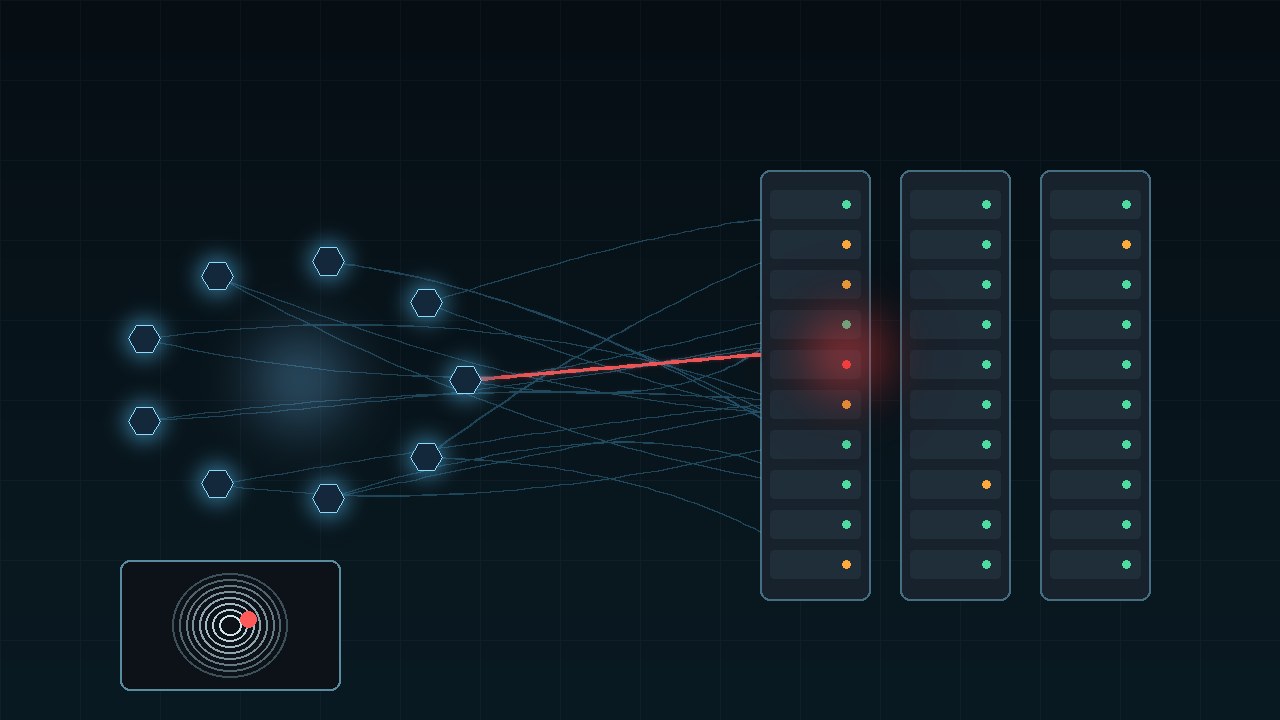
Amazon says a China-linked group's Cairn AI agents found and exploited a MONAI Label zero-day in about 11 minutes. What happened and how to patch it.
On Friday, November 20, 2026, Amazon Integrated Security CISO CJ Moses published a report ↗ on a hacking campaign run largely by AI agents. The attacker gave the agents one goal, "obtain shell access," and a list of IP addresses. The agents did the rest, and along the way they found a zero-day in an open-source medical imaging AI tool and used it to take full control of a server.
The tool the attacker used is Cairn, which Amazon describes as an open-source autonomous AI penetration-testing framework "built as a research and problem-solving engine for defenders." Give it a starting point and a plain-language objective, and it coordinates several AI agents to find a path there.
The Register ↗ and The Record ↗ both reported the findings the same day.
Amazon could see the whole campaign because the attacker left the Cairn server online without authentication. On September 10, Amazon Threat Intelligence found it and read the project settings, prompts and AI output. The prompts were in Simplified Chinese and script timestamps used China Standard Time. Amazon says it has "moderate confidence" the operator is a Chinese-nexus actor.
The targets were university IP addresses in East Asia, outside mainland China, over about 48 hours starting September 8.
| Target | What the agents did | Result |
|---|---|---|
| Open Redis server at one university | ~16 hours, 148 sequential actions: Redis replication abuse, sandbox escape, config writes, Log4Shell, an SSRF in a Qdrant instance, credential sprays | Failed |
| University GPU server | Built ~80 real usernames from faculty pages and papers, then tried 30,000+ logins over 6+ hours | Failed |
| MONAI Label (medical imaging AI app) | Mapped the API, found an upload parameter vulnerable to path traversal | Arbitrary file write in ~11 minutes, then a root shell |
In a later session the agents wrote a Python reverse shell into sitecustomize.py, a file Python loads at startup, then called a training endpoint to start a new Python process. That gave them a shell running as root. The human operator then stepped in, handed the agents a proxy into a second university's network, and pointed them at more machines there.
Amazon says it has "high confidence" the bug was a zero-day, because there was no fix, issue or advisory for it anywhere.
The flaw is in MONAI Label ↗ versions up to and including 0.8.5. The PUT /datastore/image endpoint used a caller-supplied image ID as a file path without checking it, so a value like ../../../tmp/x writes anywhere the server process can. The advisory notes that authentication is off by default, so any client that can reach the server can exploit it.
MONAI Label 0.8.6, published on GitHub and PyPI on November 22, 2026 (01:29 UTC), lists the fix as CVE-2026-133968 in its release notes ↗.
What to do if you run MONAI Label:
Upgrade to 0.8.6 now (pip install -U monailabel).
Turn on authentication (MONAI_LABEL_AUTH_ENABLE), which is off by default.
Don't expose the server to the internet or untrusted networks.
Check for unexpected files such as a modified sitecustomize.py, and look for traffic from the two IPs Amazon published (142[.]4.98.145 and 142[.]4.107.34, seen September 8 to 10; remove the brackets when searching logs).
"When a tool is more generic, it is less predictable because it has less structuring around the way it solves a task." — Eyal Sela, director of threat intelligence at Gambit Security, to The Record ↗
"Eleven minutes! That's how long it took autonomous AI agents to map the API of MONAI Label." — @ProferoSec ↗, the incident response firm Profero
"Attackers typed one instruction, 'obtain shell access', and AI agents found a zero-day." — Greg Chew ↗
"Amazon in fact rebuilt the attack from the attacker's own exposed Cairn history." — @Veritas_chain ↗
Reddit was not reachable from our tools for this story.
The scary part isn't the zero-day. It's the stamina. A path traversal in an upload endpoint is an old, boring bug class. What's new is an agent that spends 16 hours on a hardened Redis box, gives up, moves on, and finds the easy door on a different machine without anyone telling it to. Moses puts it well: an agent that finds and exploits a bug in minutes "completes its activity faster than many security operations centers can manually triage an alert."
Open AI tools on the internet are the soft target. The vulnerable app was an AI tool (medical imaging), and the attacker's own AI tool was exposed too. Google's threat team already flagged Cairn and similar frameworks earlier this month (our coverage), and Amazon's MadPot findings showed ARTEX agents going after open admin endpoints and default keys on self-hosted tools such as LiteLLM, Dify and Ollama. If you self-host anything AI-related with auth off by default, assume an agent will find it.
Who should care. Anyone running self-hosted AI apps: Jupyter, Ollama, model servers, labeling tools, agent dashboards. Put them behind auth and a VPN, and patch fast, because the window between "bug exists" and "bug exploited" is now measured in minutes. If you build with agent frameworks yourself, our AI agent frameworks comparison and AI code review tools roundup are good places to start tightening things up.
Verdict: a clear, well-documented case of AI agents running an intrusion with little human input. Patch MONAI Label today, and audit everything else you expose.