AI News · 5 min read
Google TPU 8tx and 8i Max: confidential AI and 2x long-context TPUs
Google added TPU 8tx (confidential inference on AMD EPYC hosts) and the dual-chip TPU 8i Max on Nov 9. What's new, what's missing, and who should care.
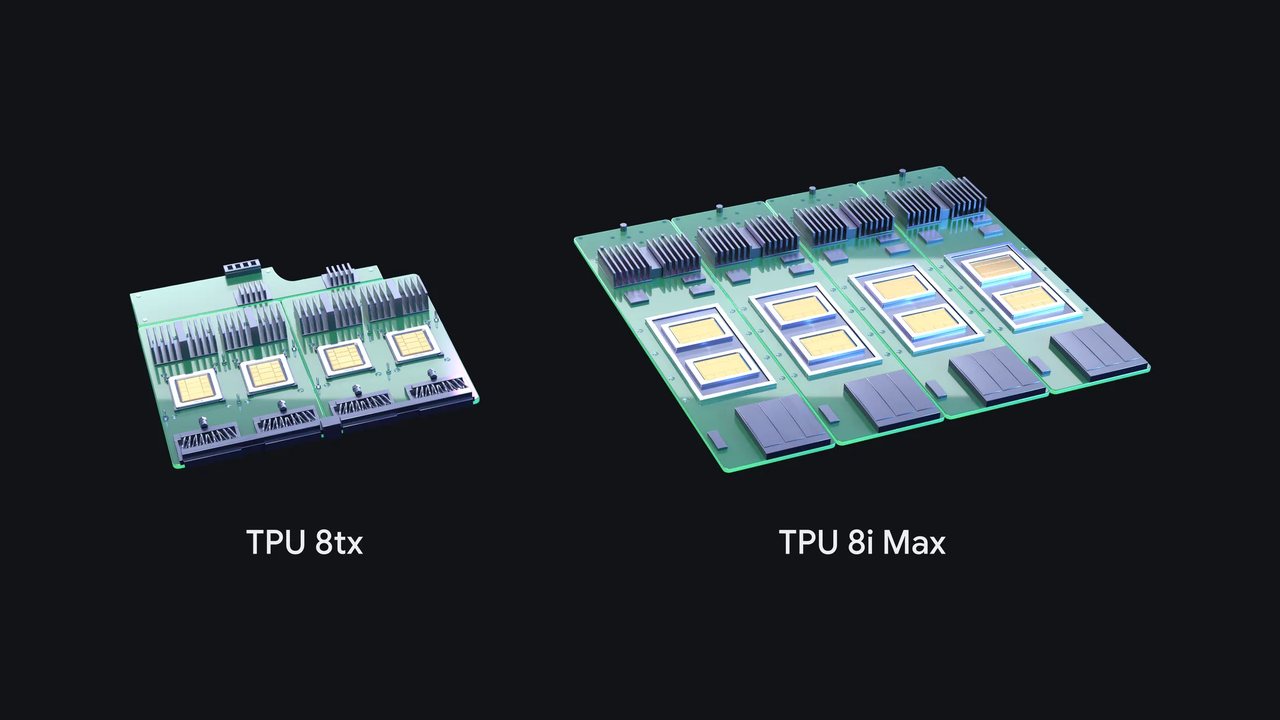
Google added TPU 8tx (confidential inference on AMD EPYC hosts) and the dual-chip TPU 8i Max on Nov 9. What's new, what's missing, and who should care.
On November 9, 2026, Google added two systems to its eighth-generation TPU line: TPU 8tx for secure, confidential inference and TPU 8i Max for very long context windows. Amin Vahdat, Google's SVP and Chief Technologist for AI and Infrastructure, announced them on Google's blog ↗. The Verge ↗ and TestingCatalog ↗ confirmed the launch the same day.
They join TPU 8t (training) and TPU 8i (low-latency reasoning), which Google showed at Cloud Next in April. Google says this is the first time it has introduced four TPU systems in one year. It also says TPUs are now a business with "nearly 100 customers," from frontier labs to trading firms and universities.
One point most headlines skipped: these are new systems, not new chips. TPU 8tx uses the same silicon as TPU 8t. TPU 8i Max puts two TPU 8i chips on one package. Google's argument is that it can change packaging, memory, networking and security around a chip in months, while a new chip takes years.
| System | Built for | What's different |
|---|---|---|
| TPU 8t | Large-scale training | April launch; Google claims up to 2.7x better training performance than the previous generation |
| TPU 8i | Low-latency reasoning | April launch; Google claims 80% better inference price-performance |
| TPU 8tx (new) | Confidential inference, small-scale training | TPU 8t silicon with 5th Gen AMD EPYC hosts; data and weights protected while in use |
| TPU 8i Max (new) | Huge context windows, rack density | Two TPU 8i chips per package: 2x compute, 2x SRAM, 2x HBM bandwidth |
TPU 8tx targets regulated companies and governments. Data is normally encrypted at rest and in transit, but it has to be decrypted in memory while it's processed. Google says 8tx builds protection into the hardware so "sensitive data and model weights" stay isolated even while in use. It also borrows the low-latency Boardfly network from TPU 8i. Google claims up to 2x lower latency than TPU 8t with a "near-zero performance penalty." Teams can fine-tune on private data, distill models and run reinforcement learning on the same system, without moving data between clusters.
TPU 8i Max goes after what Google calls the memory wall. When dozens of agents work across a whole codebase or hours of video, memory bandwidth becomes the bottleneck. Packing two chips into the same rack footprint doubles the silicon per rack.
The software in the same post probably matters more to developers than the boards do:
TorchTPU, open-sourced last month, so PyTorch code and Hugging Face models run natively on TPUs, plus TPU backends for vLLM and SGLang.
An open-source TPU agent suite (preview) that plugs into Claude Code, Cursor and Google Antigravity to automate TPU onboarding, find bottlenecks and autotune kernels in plain language.
TPU Sync, being open-sourced. It's a model-state layer that tiers KV caches across HBM, host DRAM and storage. Google claims it cuts KV transfer latency and time to first token by more than 90%.
Agent Compute Engine, which suspends idle agent sessions and moves their working memory off the chip.
Cloud Pathways and GKE dynamic slicing, both now generally available on GKE.
Google gave no pricing, no regions and no availability date for either system, as TestingCatalog also noted. There's no absolute HBM capacity for 8i Max, only "double," and no per-rack power figure. Every performance number above is Google's own. The InferenceX and AgentX price-performance claims also come with no figures we could check.
Reaction on X was mostly reposted spec lists, with a few sharper takes:
RawSteer pointed out ↗: "New systems, not new chips... Double the silicon per package makes power and cooling the first question. The post doesn't give per-rack kW."
Naveen Kumar wants to test ↗ the PyTorch path first, "since most open models ship PyTorch-first."
Shubh called the security piece ↗ "the real story," adding that "security and legal want to know where customer PII goes long before anyone cares how smart the model is."
Kabel-Salat questioned ↗ Google's line that Gemini helps produce chip layouts "in hours rather than weeks," asking whether that includes timing and DRC sign-off "or just the first placement."
Sachin read it as a signal ↗: "a separate tpu for confidential workloads says a lot about who google expects the big buyers to be."
You won't touch a TPU 8i Max directly, but you'll probably use one. Gemini runs on TPUs, and Google names frontier labs among its customers. Long-context hardware with double the bandwidth is aimed squarely at the million-token agent sessions that make tools like Gemini and Claude Code expensive. If it works, those products get cheaper or faster with no change on your end. That's an inference from Google's pitch, not a promise of lower prices.
Banks, healthcare and the public sector should look at TPU 8tx. "Run the model where the data can't leak" has been the blocker for many agent pilots. On paper, a confidential-compute system that also fine-tunes is a better fit than separate secure and training clusters. Ask about regions and certifications before you plan around it, because Google hasn't published either.
Teams self-hosting open models should start with the software. TorchTPU plus vLLM support is the first time moving a PyTorch stack to TPUs looks close to effortless. Try it on a model from our best open-source LLMs list before you sign anything. If you want models on your own hardware instead, our local LLM comparison covers that route. For the apps running on top of this hardware, see ChatGPT vs Claude vs Gemini.
Bottom line: this is a smart, fast product-line move and a direct shot at GPU-only clouds. Until Google publishes prices and availability, though, it's a roadmap, not a buying decision.