AI News · 5 min read
Fortune said disbands. OpenAI says it reorganized
On November 13, 2026, Fortune said OpenAI disbanded its stand-alone robotics team. OpenAI says the team was reorganized, and the work continues.
On November 13, 2026, Fortune said OpenAI disbanded its stand-alone robotics team. OpenAI says the team was reorganized, and the work continues.
On November 13, 2026, Wen Shao reported in Fortune ↗ that OpenAI had disbanded its stand-alone robotics team and reassigned the researchers. The headline uses "disbands." The second paragraph says the company confirmed the reorganization when Fortune asked. A spokesperson told Fortune that robotics remains a core part of OpenAI's long-term vision, and described the reorganization as a sign of commitment rather than a retreat.
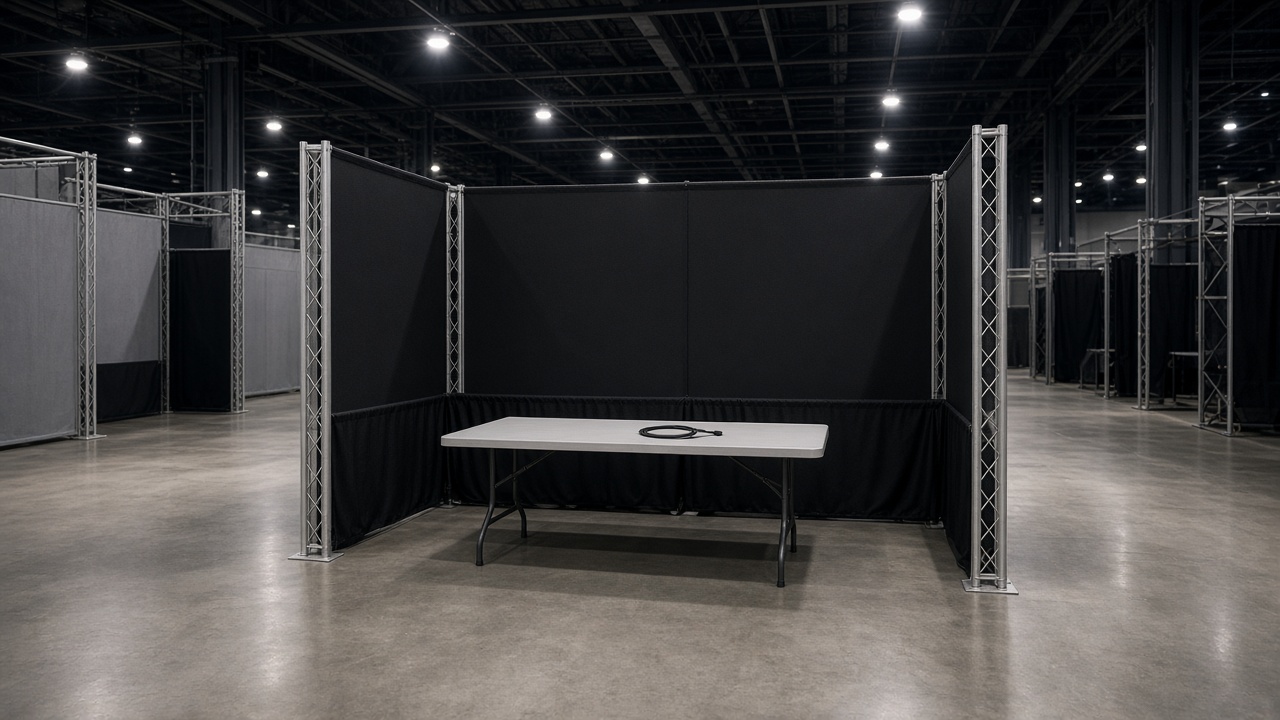
The picture above is ours. It is not a photograph of the conference booth.
Fortune says the robotics research team moved to the main research team, reporting to Chief Research Officer Mark Chen, and the applied robotics and hardware teams moved to the Applied organization, reporting to President Greg Brockman.
| Group | Where Fortune says it sits |
|---|---|
| Robotics research | Main research, under Mark Chen |
| Applied robotics and hardware | Applied, under Greg Brockman |
The change was recent enough that OpenAI had already registered for CoRL, a robotics conference in Austin. Fortune says the conference app and floor plan marked booth #208, and that the booth was empty, with no OpenAI logo, when a reporter visited. A November 13 update on the story says a few former members of that stand-alone team were still at the conference, without a display or a demo.
Fortune's history: the earlier robotics effort wound down in 2020, with cofounder Wojciech Zaremba later citing limited robot data. A stand-alone team came back in 2024 with a Figure partnership for humanoid models. Figure ended that partnership in February 2025 to build its own robot AI. Fortune says OpenAI is developing its own humanoid, with Sam Altman targeting a first public demonstration in 2027, and that the spokesperson still calls general-purpose robots a commitment.
Fortune says researchers saw GPT-6 Astra do some robot tasks directly. At the start of the year, the spokesperson told Fortune, the team assumed the path ran through models such as Sora. Fortune says general models, including GPT-6 Astra, have since been applied directly to robotics, and that this is what motivated OpenAI to disband the stand-alone team.
Fortune describes an Nvidia study in the same article: an Astra-powered agent reached 74.8% on a simulated manipulation benchmark, against 51.0% for the best specialized models on that leaderboard. Fortune says the robot is simulated, not physical. We have not read the Nvidia paper. Those two percentages are Fortune's account of the study.
Guanya Shi, at Carnegie Mellon's Robotics Institute, told Fortune he reads the move as OpenAI treating robotics as "no longer a special problem." He still wants smaller models on the robot, without a constant network connection. Russ Tedrake, an MIT professor and cofounder of Walden Robotics, points to data from robots already in real workplaces. Pete Florence of Generalist told Fortune it is not clear that any current model dominates robotics in the long run. Fortune also cites a cost squeeze: "side quests" dropped, Sora among the cuts, and operating losses it says reportedly totaled $10.9 billion in the most recent quarter.
The Decoder ↗, updated November 14, 2026, says OpenAI clarified that it reorganized the team to work more closely with research and product, and that robotics work continues. The corrected opening says researchers were folded into other teams to accelerate the work.
On November 13, Scott Cory ↗ (@slessans), whose X bio reads "robot intelligence @openai," posted: "misleading headline. robotics team is making insane progress. astra and our newer models show much better generalization and scaling on robotics than other approaches so we are leaning into that and working more closely with the rest of research. same program, roadmap, goals."
Fortune attributes the confirmation to a spokesperson and does not give a headcount.
Fortune's story does not change a ChatGPT plan, a Codex limit, or an API price. Astra, here, is the general model Fortune says is being pointed at robots. GPT-6 Cyber is a different November 5 model, gated to Daybreak Red. The Pierre Computer acquisition is a November 4 Codex tools deal, not this reorganization. The 2027 humanoid demonstration is Fortune's report of Altman's target, not a product page.
"OpenAI disbands its robotics team, yet Altman still wants a humanoid demo in 2027. Researchers move to other teams. Who carries the risk if the date slips?" — Founderscrowds ↗ (@Founderscrowd). "Disbands" is the Fortune headline. The 2027 target and the move to other teams are also Fortune's reporting.
"*OPENAI DISBANDS ITS ROBOTICS TEAM: FORTUNE" — Negligible Capital ↗ (@negligible_cap). The post showed 64,893 views when we read it on November 15.
Scott Cory's post is quoted above. "Same program, roadmap, goals" is his claim.
Reddit was not reachable for this story.
Use "reorganized" for OpenAI's account, and keep "disbanded" as Fortune's word for the same move. Research sits under Mark Chen. Applied robotics and hardware sit under Greg Brockman. The Decoder says OpenAI's clarification is that the work continues. Cory says the program, roadmap, and goals are the same. The empty CoRL booth is what Fortune saw that week.
ChatGPT and Codex users have nothing to switch. The products in ChatGPT vs Claude vs Gemini are unchanged by this story. So is the Codex tooling in the Pierre deal. If a headline says GPT-6, check which one: Cyber is the Daybreak Red model from November 5. Astra is the name Fortune uses for the robot result.
The 74.8% figure is a simulated benchmark in Fortune's telling, and Shi's "no longer a special problem" is his reading. Neither is a robot we watched. NVIDIA Cosmos 3 is a different bet from the same month: four open-weight simulation checkpoints, including action-conditioned video for two-arm robots. That release does not claim a general chat model is the robot's brain.