AI News · 5 min read
Tesla FSD v15 Reality View: How Its Real-Time AI Video Works
Tesla FSD v15 adds Reality View, a live driving scene Elon Musk says is real-time AI video, not a game engine. How it works, who gets it and what to watch.
Tesla FSD v15 adds Reality View, a live driving scene Elon Musk says is real-time AI video, not a game engine. How it works, who gets it and what to watch.
On Saturday, November 21, 2026, Tesla said Full Self-Driving (Supervised) v15 is "now starting to roll out," upgrading "every part of the end-to-end driving network." Teslarati ↗ reports the first builds are going to Early Access Program members, and that Elon Musk said a wide release would follow in December.
The feature everyone is posting about is Tesla Reality View. It replaces the old cartoon-style driving visualization with a photorealistic, moving view of the car's surroundings, seen from a virtual camera above and behind the car. The release notes call it a "real-time generative driving visualization" that lets you "see and control what FSD is planning to do." You can pick full screen, map, split view, or a "quiet mode" with the visualization turned off.
Musk was blunt about how it is made: "This is real-time AI video generation (no gaming engine!) using just half of one AI4 TRIP accelerator," he posted ↗.
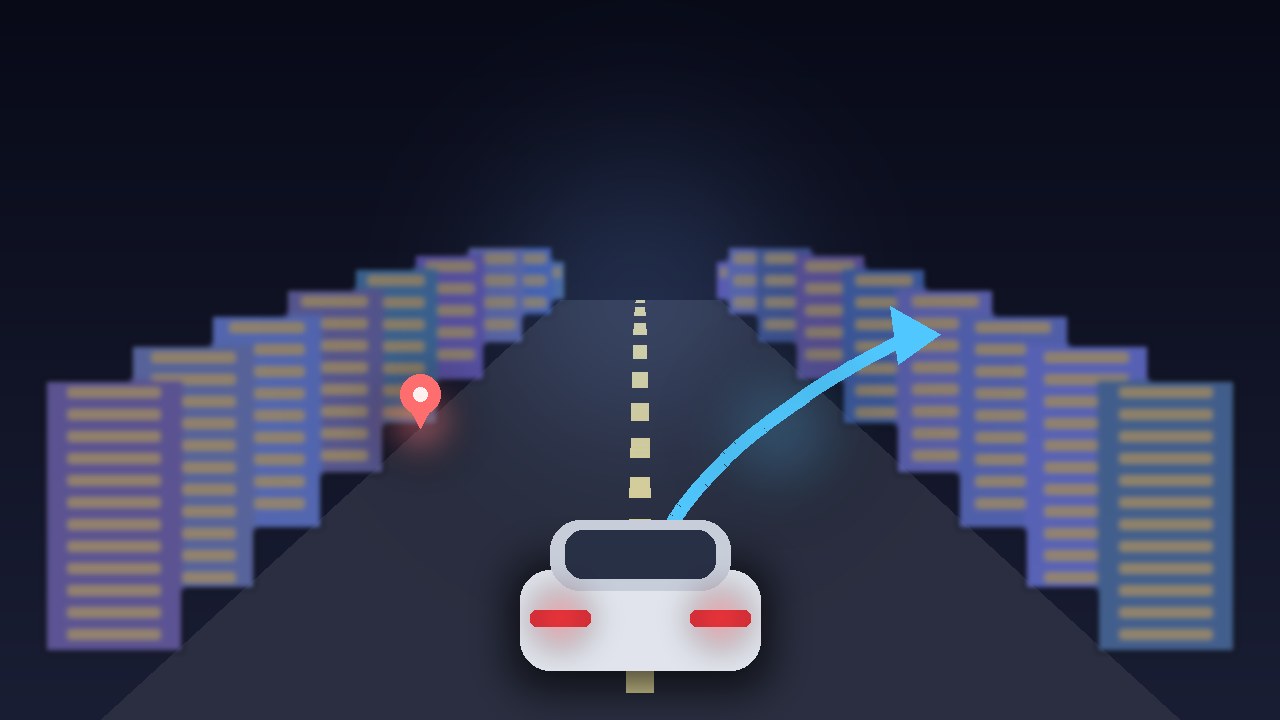
The image above is an original illustration made by aitoolranked, not a Tesla screenshot.
Tesla hasn't published a paper. The best technical detail so far comes from posts by Musk and Ashok Elluswamy, who leads Tesla's AI software.
Elluswamy wrote ↗ that "the same end-to-end driving model also renders a realistic view of the world around the vehicle," and that it is "not there just because it looks cool." It shows the car's intent: arrows mark the turns FSD plans to take, and pins mark where it plans to park.
In a longer reply ↗ on November 22, Musk described the pipeline:
| Part | What Musk says |
|---|---|
| Input | Recent Tesla Universal Vision Encoder (UVE) features, the same ones that feed the 3B encoder model that produces the driving actions |
| Generator | A separate ~1B-parameter diffusion model (a "conditional mean-flow model") that takes the previous frame with noise added and denoises it into the next one |
| Output | Short video chunks of 8 images at 36 fps, at the screen's resolution |
| Compute | Half of one TRIP engine on AI4, running every UVE frame at 18 Hz, spread over 4 cycles |
| Known issue | Latency is "a bit high"; Musk says Tesla has ways to cut it by roughly 35% |
Musk added ↗ that the in-car version is a much smaller cousin of a "~pixel-perfect world model" Tesla has used "since last year" for synthetic training data. He also said the next chip, AI5, has "roughly 12X more compute."
Reality View is the visible part. The release notes ↗ also list:
A new vision encoder shared by FSD, Robotaxi and Optimus, trained on "millions of internet videos." Tesla credits it with a 25x better critical intervention rate. That figure is Tesla's own and has not been independently checked.
Navigation that learns the start and end of trips from fleet route preferences, plus multiple parking options at your destination.
Better detection of signs, small animals, debris, potholes and deep standing water, and better speed handling in school zones and bad weather.
Speed Camera Slowdown, which you can cancel with the accelerator. Cancel twice at the same camera and the car remembers.
Bike Rack Mode, which allows FSD with a hitch accessory but disables reversing, Autopark and Summon.
Driver monitoring that works with more hats and sunglasses.
"It's like GTA" — Elon Musk ↗, as reported by Gizmodo
"Tesla Reality View looks INSANE with FSD v15!" — @BLKMDL3 ↗
"In autonomy, passenger experience is the most under-discussed moat." — Chris Kong ↗ (@ckongvc)
"@elonmusk can we get Tesla Reality View without FSD?" — @pedrofvrito ↗
Not everyone was won over. Gizmodo's Mike Pearl worried about drivers who stop telling the game-like screen apart from the real road. Electrek's Fred Lambert, quoted by Gizmodo ↗, wrote that the change list "reads like a list of FSD's biggest current weaknesses" and that "FSD has never improved in a straight line."
Reddit was not reachable from our tools for this story.
This puts a generative world model in a consumer car. Google's Genie 4, Nvidia's Cosmos 3 and World Labs' Atlas run in data centers. Tesla says a ~1B diffusion model is producing live video on part of a car chip, and it is going out to customer cars, starting with early access. If Musk's numbers hold, that is a real efficiency result for anyone following on-device AI video.
A generated picture is not a camera feed. Diffusion models fill in details, and that is the point of a pretty render. Tesla's argument is that the view comes from the same features the driving model uses, so it shows what the car "thinks" is out there. That is useful for showing intent. It also means the screen can look confident when it's wrong. FSD (Supervised) still needs your eyes on the road, not on the render.
Who should care. If you own a Tesla on the early access program, try the quiet and split views and decide whether the full render helps or distracts you. If you follow AI video, the latency and frame-rate numbers above are a good reference point for on-device generation. For AI video tools you can actually use for your own clips, see our best AI video generators ranking.
Verdict: an impressive AI demo shipped to real cars, on top of a driving update that still has to prove itself on the road. Wait for the December wide release and independent driving reports before believing the 25x figure.