What changed on November 20
OpenAI's rewritten Usage Policies ↗ took effect on November 20, 2026. The company first announced them on October 21 in a post called Broad access through consistent standards ↗, which gave customers 30 days' notice.
Two changes matter most if you build with AI.
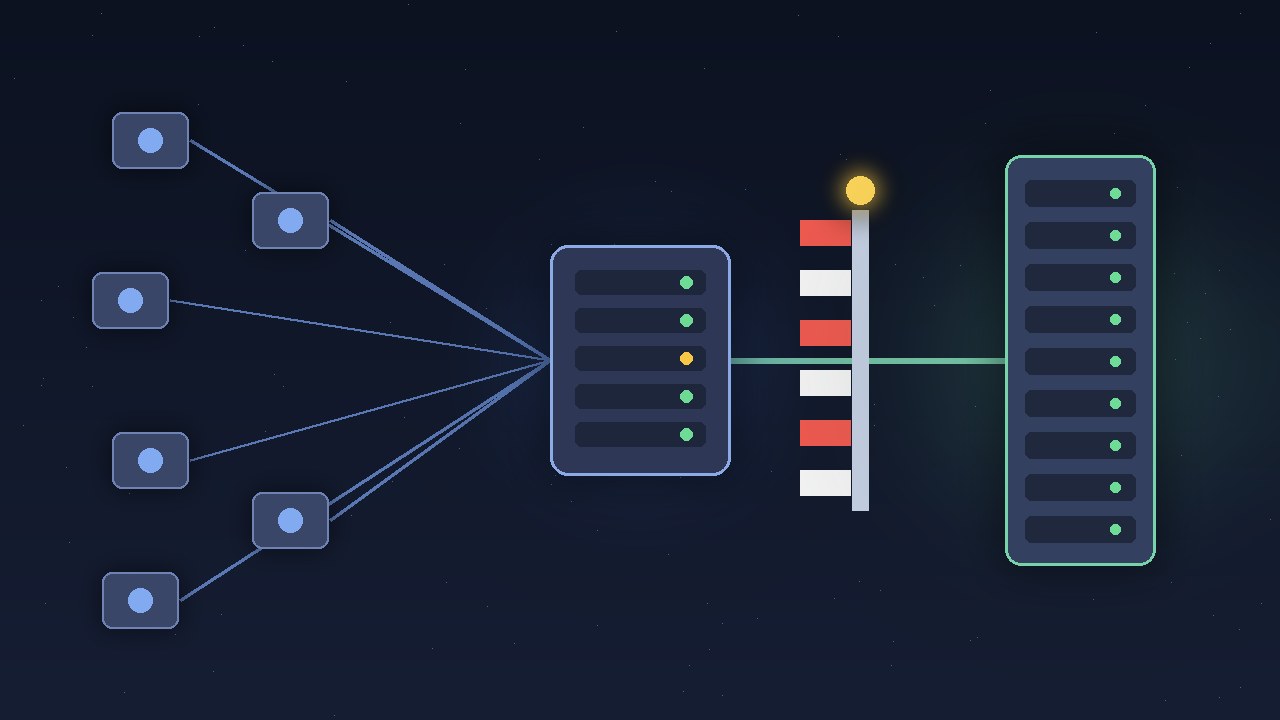
1. Routers and gateways now need OpenAI's sign-off. The new text reads: "If you operate a model-access intermediary platform or other service that enables third parties to directly access OpenAI models, you must obtain our prior review and approval." The next sentence sets the limit: "This requirement does not apply solely because an application integrates OpenAI models to power its features or functionality." In its October post, OpenAI named "model routers or AI gateways" as the kind of service it means.
2. A wider ban on training rivals. A new "Training and developing models" section says you must not use OpenAI models or outputs "to generate, prepare, select, or supply training material or signals for models that are intended as alternatives to or substitutes for OpenAI models or services." That covers building datasets, rubrics and RL environments, giving labels, scores or preferences, and filtering training data. It also applies "even if you do not train the resulting model." Research, benchmarking, evaluation and product development are still allowed within those limits.
The update also adds approval rules for national security and law enforcement uses, and widens the human-review rule from automated decisions to automated actions in areas like credit, housing, hiring, legal and medical work.
Semafor ↗ reported the router rule on November 20. It wrote that the rule gives OpenAI "more control over how much of the world — including China — can access its AI models." It also noted that US agencies and companies, including Anthropic, have accused Chinese labs of distilling US models through resellers that hide who the end user is. PPC Land ↗ pointed out that the policy doesn't define "model-access intermediary" or "directly access," and doesn't publish an application process or a review time.
Why now: the distillation fight
On the same day the rules took effect, OpenAI published Combatting adversarial distillation ↗. It says GPT-6.2 Astra now ties a model's hidden reasoning to the conversation that produced it, so editing an earlier message drops the reasoning that came after it. In OpenAI's own adaptive red-team tests, attacks that pulled hidden reasoning from an earlier request worked 54.0% of the time on GPT-6 Astra and 0.2% on GPT-6.2 Astra. Attacks on the current request fell from 22.9% to 0.9%. These are OpenAI's numbers, not independent ones.
OpenAI has also reported disrupting a coordinated distillation campaign ↗ and linked a core part of it to people associated with Moonshot AI, the maker of Kimi. Read together, the router rule and the training ban close the two routes a copier would use: anonymous access through a reseller, and turning outputs into training data.
Who is affected
| You run... | Approval needed? |
|---|
| An app that uses GPT inside its own features (a chatbot, a writing tool, a support bot) | No, according to the policy's own carve-out |
| A router, gateway or reseller that lets other people call OpenAI models directly | Yes, prior review and approval |
| A pipeline that uses GPT to label, score or filter training data for your own model | Not an approval question: it's banned if that model is meant to replace OpenAI's |
Existing contracts still count. The training section says its limits "do not prohibit uses expressly permitted by your applicable Agreement with OpenAI." The policy doesn't say how long reviews take or whether services already running get a grace period.
OpenRouter, the best-known router, hadn't commented publicly on the rule by the time we published. We found no posts about it from its official X account since November 18. It is already in the news this week for cutting three inference providers after a prompt-data leak (our OpenRouter and Dragos breakdown has the details).
What people are saying
Most reactions so far are developers working out which side of the line they fall on:
"From today, any AI gateway or model router that lets third parties reach GPT directly needs OpenAI's prior approval. OpenRouter, Vercel's AI Gateway, LiteLLM proxies, all of it. Your app that calls GPT inside its own features is fine." — @vaibhavbalkundi ↗. The policy doesn't name any of those products, so treat that list as his reading.
"A quick test: swap the model underneath. If customers wouldn't notice, they're buying a result. If the model is the selling point, you're..." — @BrianMiller_8 ↗
"No using its models or outputs to create, score or filter training data for rival models. Routers now need OpenAI approval. Check your fine-tune data." — @JShainskiy ↗
Attorney Elena Gurevich summed it up on LinkedIn (quoted by PPC Land): "if you are a business that provides your customers direct access to OpenAI's models, you need OpenAI's approval first."
Reddit wasn't reachable from our tools for this story.
Our take
If you only call GPT from your own product, nothing changes today. Your app is the carve-out the policy describes. But read the training section closely. If you use GPT to grade outputs, write synthetic data or filter a dataset for a model you sell as an alternative, that's now spelled out as off-limits, even if a contractor does the training.
If you reach GPT through OpenRouter or another gateway, keep a direct key ready. We aren't saying routers will lose access. The policy doesn't say that, and existing agreements carry over. But approval now sits with OpenAI, and there's no public timeline. Teams that need GPT in production should test a direct OpenAI API key, or Azure, as a fallback. That way an approval delay can't take a feature down. Multi-model teams can also look at Perplexity's Orchestrator API and OpenRouter's Auto Code router for how routing products are changing.
The bigger picture: frontier labs are tightening who gets their models and how. Anthropic changed its supported-regions rules this month too. If you depend on one lab's model, compare the options in our ChatGPT vs Claude vs Gemini guide and our list of ChatGPT alternatives. For pricing on the models in question, see our GPT-6.2 Astra and Sol breakdown.